What’s moving now
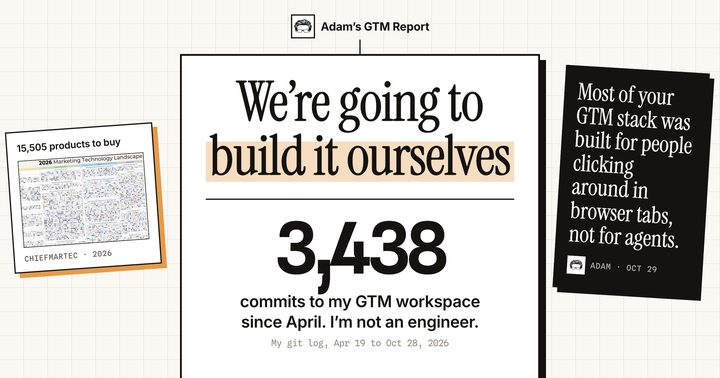 We're going to build it ourselvesOct 29 · The new stack, two paths for GTM, agents vs infra
 198.0× the usual response · 7,028 engagements
 70.9× the usual response · 2,198 engagements
 35.9× the usual response · 2,405 engagements
 17.5× the usual response · 3,573 engagements
 11.7× the usual response · 865 engagements
 DataikuUSD 188–235 (period unspecified base salary) · no family median yetFeatured roleSenior Director, Demand Generation
 DrataUSD 180,000–276,000 (period unspecified base salary) · no family median yetFeatured roleSales Operations Manager
 FigmaUSD 140,000–296,000 (annual base salary) · 15% above the medianFeatured roleSenior Manager, GTM Engineering
 IruFirst seen Oct 30Featured roleDirector of Brand & Creative
 ContentsquareFirst seen Oct 29Featured roleSocial Media Lead
 RunwayUSD 130,000–200,000 (annual salary) · 5% below the medianTrending Creator
 PJ Accetturo (LinkedIn)Promotes a dinosaur-riding comedy episode, reports a $28,775 production cost and over 62 million cumulative Nexus views, and offers directing details and Dreamina prompts.
 640 interactions · 2d agoTrending Creator
 Melissa RosenthalArgues Cisco’s reported AI legacy code rewrite should be judged by behavioral equivalence and defect counts, starting with a narrow four-week product test.
 414 interactions · 2d agoTrending Creator
 Dan RosenthalWorkflows.io reports its best month in October, new Clay and HubSpot partnerships, three enterprise project starts, and plans to launch LinkedIn advertising as its fifth service.
 346 interactions · 2d agoTrending Creator
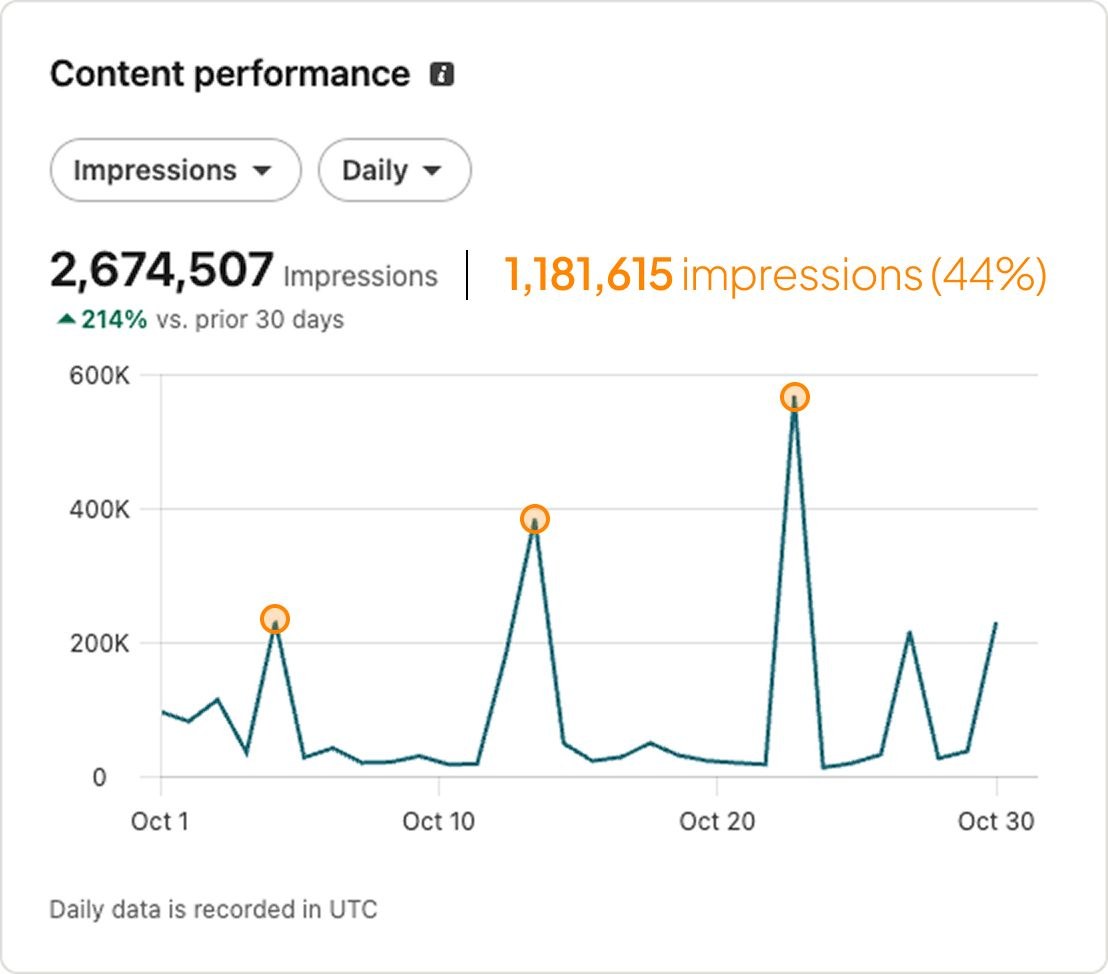
 Peter WalkerArgues LinkedIn reach increasingly concentrates among a few posts, outcomes are harder to predict, and consistent posting remains the practical response to changing algorithms.
 253 interactions · 2d agoTrending Creator
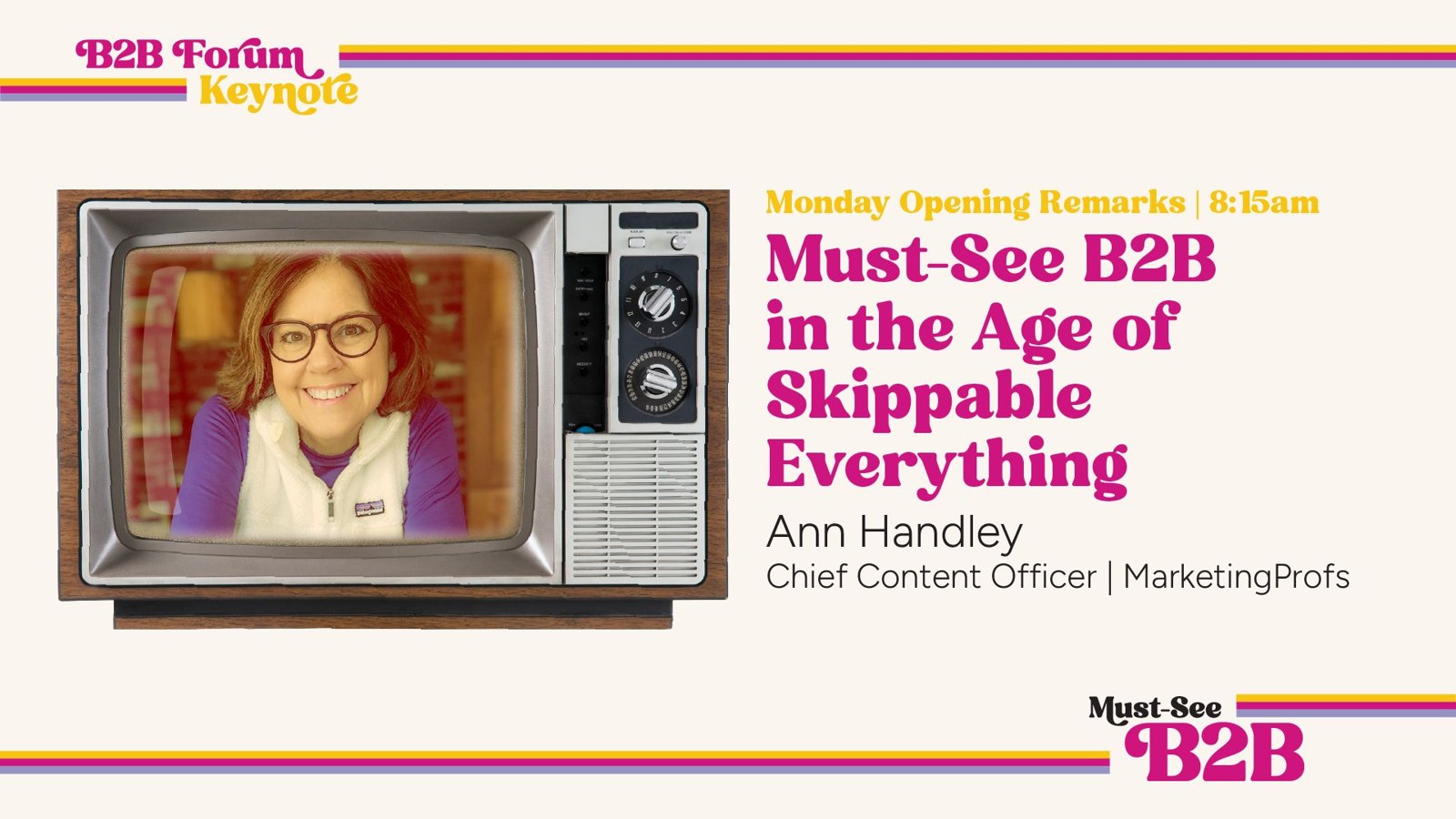
 Ann HandleyAnn announces a new book and keynote at Boston’s MarketingProfs B2B Forum, arguing human judgment and in-person conversations matter amid widespread AI marketing tools.
 222 interactions · 1d agoTrending topicInfluencer Marketing & Creator Partnerships+92.1% vs prior 30d · 1.1% of the conversationTrending topicForward Deployed Engineering+66.8% vs prior 30d · 0.8% of the conversationTrending topicAgentic GTM+53.8% vs prior 30d · 0.8% of the conversationTrending topicAI-Driven Advertising+53.5% vs prior 30d · 0.7% of the conversationTrending topicPaid Media+45.6% vs prior 30d · 3.4% of the conversation
 Braze↑53 places in GTM Developer Tools
 Tavily↑42 places in GTM Developer Tools
 Ploy↑31 places in AI-Native GTM Challengers
 Grok Bot↑3 places in Coding Agents & Harnesses for GTM
 Lightfield↑20 places in AI-Native GTM Challengers
Trending Topics
Market Moves
 227 engagements · 2.2× usualPost ↗7,028 engagements · 198.0× usualPost ↗2,405 engagements · 35.9× usualPost ↗
 6,345 engagements · 3.6× usualPost ↗2,198 engagements · 70.9× usualPost ↗
 R986 engagements · 10.9× usualPost ↗3,573 engagements · 17.5× usualPost ↗
GTM Tech Index










































Tracking key moves in GTM tech since June 2026. See methodology. Something missing? Send it to adam[at]adamgtm.com
Featured trends
All topics
BetaFigures move as the panel grows and definitions sharpen.
+16.7%vs prior 30d+24.3%vs prior 30d-18.2%vs prior 30d+8.9%vs prior 30d+25.8%vs prior 30d-23.3%vs prior 30d -66.5%vs prior 30d-15.4%vs prior 30d+12.2%vs prior 30d-5.5%vs prior 30d+31.8%vs prior 30d+24.9%vs prior 30d-7.2%vs prior 30d+18.2%vs prior 30d+62.8%vs prior 30d
 -43.2%vs prior 30d+34.5%vs prior 30d
 -25.8%vs prior 30dNEWvs prior 30d
 +22.0%vs prior 30d+38.3%vs prior 30d+25.9%vs prior 30d+70.4%vs prior 30d-13.5%vs prior 30d+27.8%vs prior 30d-20.4%vs prior 30d+29.8%vs prior 30d-65.1%vs prior 30d+8.6%vs prior 30d+28.9%vs prior 30d-11.0%vs prior 30d-26.2%vs prior 30d-19.5%vs prior 30d-10.2%vs prior 30d-0.4%vs prior 30d+13.5%vs prior 30d+4.3%vs prior 30d-32.6%vs prior 30d
 -35.9%vs prior 30d
 +38.1%vs prior 30d
 -31.7%vs prior 30d
 +148%vs prior 30d-32.5%vs prior 30d
 -35.7%vs prior 30d-17.8%vs prior 30d
 -34.6%vs prior 30d
 -1.9%vs prior 30d
 -63.7%vs prior 30d
 -13.5%vs prior 30d
 -40.8%vs prior 30d
 +53.5%vs prior 30d
 -7.3%vs prior 30d
 -8.2%vs prior 30d
 -34.8%vs prior 30d
 +32.6%vs prior 30d-9.4%vs prior 30d-31.3%vs prior 30d
 +47.1%vs prior 30d
 -17.1%vs prior 30d
 -9.6%vs prior 30d-70.8%vs prior 30d-52.5%vs prior 30d
Nothing matches this filter.
The tools and practices teams use to build agents for sales, marketing and RevOps.
Building GTM Agents held roughly a quarter of the conversation from March through June, then eased, with only a small August bounce; the last 30 days are down 15.3%. No single event explains the decline. The evidence spans reusable skills, a Claude skill for deal timelines, and a proposal for live business models, showing continued experimentation without renewed share growth.
Posts to understand this · as of Oct 30
Inside Building GTM Agents
| Brand | GTM Index | |
|---|---|---|
| 1 | Claude Code | 99 |
| 2 | Grok Bot | 76 |
| 3 | Codex | 84 |
| 4 | Clay | 93 |
| 5 | Cursor (Anysphere) | 77 |
| 6 | HubSpot | 90 |
| 7 | Salesforce | 94 |
| 8 | Lovable | 61 |
| 9 | Replit | 55 |
| 10 | Instantly | 65 |
How brands earn visibility, citations and recommendations inside AI answers.
AEO/GEO climbed to a June high before three months of declining share; the last 30 days show a 19.2% recovery. The evidence moves from Daydream’s $15 million raise and HubSpot’s Loverboy campaign to Kyle Poyar’s report of stronger channel adoption. That adoption evidence gives the renewed discussion substance, although the 90-day trend remains down.
Posts to understand this · as of Oct 29
Inside AEO/GEO
| Brand | GTM Index | |
|---|---|---|
| 1 | Profound | 53 |
| 2 | Ahrefs | 50 |
| 3 | HubSpot | 90 |
| 4 | Semrush | 47 |
| 5 | Clay | 93 |
| 6 | Salesforce | 94 |
| 7 | Claude Code | 99 |
| 8 | AirOps | 41 |
| 9 | Grok Bot | 76 |
| 10 | Vercel | 62 |
Marketing that delivers value in the feed or answer instead of forcing a click or form fill.
Zero-click conversation eased from its May high through September, then recovered in October; the last 30 days are up 22.2%, while the 90-day comparison remains negative. The posts move from Dave Gerhardt’s critique of gated-content attribution to brand authority in AI answers and Amanda Natividad’s challenge to blanket no-link advice. The rebound accompanies a more specific debate about tactics and measurement.
Posts to understand this
Inside Zero-Click Marketing Strategies
| Brand | GTM Index | |
|---|---|---|
| 1 | Profound | 53 |
| 2 | HubSpot | 90 |
| 3 | Ahrefs | 50 |
| 4 | Clay | 93 |
| 5 | Semrush | 47 |
| 6 | Claude Code | 99 |
| 7 | AirOps | 41 |
| 8 | Salesforce | 94 |
| 9 | Grok Bot | 76 |
| 10 | Lovable | 61 |
The people, tools and operating model behind custom go-to-market systems.
GTM Engineering declined from May before settling near 6.9% in September and October, with the last 30 days still down 3.9%. Clay’s $115 million Series D did not interrupt that decline. The posts show a persistent implementation thread beneath the flatter curve: Clay’s custom rep and pricing tools, plus an agency run through GitHub repos and Claude skills.
Posts to understand this
Inside GTM Engineering
| Brand | GTM Index | |
|---|---|---|
| 1 | Clay | 93 |
| 2 | Claude Code | 99 |
| 3 | HubSpot | 90 |
| 4 | Instantly | 65 |
| 5 | Prospeo | 54 |
| 6 | Codex | 84 |
| 7 | Salesforce | 94 |
| 8 | HeyReach | 54 |
| 9 |  FullEnrich | 44 |
| 10 | Grok Bot | 76 |
How software exposes its data and actions so agents can use it directly.
Headless & Agent Interfaces lost share after May, briefly recovered in September, then fell to 6.0% in October; the last 30 days are down 20.2%. No single event explains the decline. Cloudflare’s monetization gateway waitlist, Notion’s developer platform, and Databricks’ Unity Gateway CLI show recurring work on agent access, payments, and administration without a sustained lift in attention.
Posts to understand this
Inside Headless & Agent Interfaces
| Brand | GTM Index | |
|---|---|---|
| 1 | Salesforce | 94 |
| 2 | Claude Code | 99 |
| 3 | HubSpot | 90 |
| 4 | Clay | 93 |
| 5 | Codex | 84 |
| 6 | Grok Bot | 76 |
| 7 | Cursor (Anysphere) | 77 |
| 8 | Instantly | 65 |
| 9 | Exa.ai | 49 |
| 10 | Lovable | 61 |
How teams use buyer signals to decide who to target, when and why.
Signal-Based Sales & ABM recovered in September and October after a May-to-August slide, with the last 30 days up 10.3%. No single announcement explains the rebound. The recurring thread is turning signals into action: practitioner posts describe coordinated outbound agents and signal catalogues, while Zoom’s October post connects conversation intelligence with deal context.
Posts to understand this
Inside Signal-Based Sales & ABM
| Brand | GTM Index | |
|---|---|---|
| 1 | Clay | 93 |
| 2 | HubSpot | 90 |
| 3 | Claude Code | 99 |
| 4 | Salesforce | 94 |
| 5 | Instantly | 65 |
| 6 | HeyReach | 54 |
| 7 | AI Ark | 48 |
| 8 |  6sense | 43 |
| 9 | Gong | 64 |
| 10 | Prospeo | 54 |
The choice between open models and closed APIs, including cost, control, quality and lock-in.
Open versus closed model discussion accelerated in June and peaked in July, when Hugging Face amplified NVIDIA’s support for open models. Share then declined through September, with the last 30 days down 15.7% despite Mistral Large 4’s preview and Kimi K3.1 Pro’s launch announcement; fresh releases have kept the debate active without restoring its summer share.
Posts to understand this · as of Oct 31
Inside Open vs. Closed Models
| Brand | GTM Index | |
|---|---|---|
| 1 | Claude Code | 99 |
| 2 | Codex | 84 |
| 3 | Cursor (Anysphere) | 77 |
| 4 |  Together AI | 34 |
| 5 | Grok Bot | 76 |
| 6 | OpenRouter | 52 |
| 7 | Replit | 55 |
| 8 | Salesforce | 94 |
| 9 | Clay | 93 |
| 10 | ElevenLabs | 56 |
How companies prove AI delivers enough value to move beyond a pilot.
The conversation held near 7–8% of share from April through July, then declined each month through October; the last 30 days are down 23.9%. October evidence points to stalled returns and tighter scrutiny: Dun & Bradstreet reports an ROI plateau, Constellation expects budget pressure over value concerns, and Decagon emphasizes prioritizing valuable use cases as enterprises move beyond initial rollouts.
Posts to understand this
Inside Proving AI ROI
| Brand | GTM Index | |
|---|---|---|
| 1 | Salesforce | 94 |
| 2 | Claude Code | 99 |
| 3 | Clay | 93 |
| 4 | Grok Bot | 76 |
| 5 | HubSpot | 90 |
| 6 | Cursor (Anysphere) | 77 |
| 7 | Codex | 84 |
| 8 | Intercom | 43 |
| 9 | Nooks | 48 |
| 10 | Zapier | 53 |
How large companies move AI from small pilots into secure, useful production work.
Enterprise AI Adoption held around 6–7% through July, then declined through September; the last 30 days are down 7.2%. The posts move from Vanta’s AI-linked growth story and examples of AI supporting outbound teams to the difficulty of documenting processes before automation. That gives the conversation a concrete implementation thread, though it does not establish what caused attention to fade.
Posts to understand this · as of Oct 26
Inside Enterprise AI Adoption
| Brand | GTM Index | |
|---|---|---|
| 1 | Salesforce | 94 |
| 2 | Claude Code | 99 |
| 3 | Clay | 93 |
| 4 | HubSpot | 90 |
| 5 | Grok Bot | 76 |
| 6 | Codex | 84 |
| 7 | Cursor (Anysphere) | 77 |
| 8 | Zapier | 53 |
| 9 | Nooks | 48 |
| 10 | Intercom | 43 |
How teams create, distribute and judge marketing content made with AI.
AI Content held near 4–5% of conversation from April through September before slipping to 3.5% in October; its last-30-day share is down 17.9%. The posts show product activity without a sustained lift: Profound’s $180 million round, Higgsfield’s ChatGPT integration and Synthesia’s Syren demo. The recurring thread is agents that create and distribute content inside existing workflows.
Posts to understand this
Inside AI Content
| Brand | GTM Index | |
|---|---|---|
| 1 | Higgsfield | 39 |
| 2 | Claude Code | 99 |
| 3 | Grok Bot | 76 |
| 4 | Runway | 36 |
| 5 | Clay | 93 |
| 6 |  HeyGen | 32 |
| 7 | ElevenLabs | 56 |
| 8 | HubSpot | 90 |
| 9 | Apify | 52 |
| 10 | Canva | 50 |
How AI changes what software companies build, charge for and deliver.
Conversation share peaked in May and declined through September, with another 5.9% decline over the last 30 days. ElevenLabs’ May price cuts supplied a concrete example of changing software economics, while Salesforce’s August results challenged the replacement thesis. The evidence shows competing arguments about pricing, incumbent durability and delivery models, rather than one event that explains the fade.
Posts to understand this · as of Oct 27
Inside Software Business Model Disruption
| Brand | GTM Index | |
|---|---|---|
| 1 | Salesforce | 94 |
| 2 | Clay | 93 |
| 3 | HubSpot | 90 |
| 4 | Claude Code | 99 |
| 5 | Vercel | 62 |
| 6 | Gong | 64 |
| 7 | Nooks | 48 |
| 8 | Cursor (Anysphere) | 77 |
| 9 | ZoomInfo | 51 |
| 10 | Exa.ai | 49 |
How companies keep agents secure, accountable and under control as they take on real work.
Agent governance climbed through July, when OpenAI introduced GPT-Red, then lost share each completed month through October; the last 30 days are down 28.6%. The later posts shift toward practical evals and company-wide controls, including Liam Dunne’s Pascal harness. That pattern shows ongoing implementation work, but the evidence doesn’t identify a single cause for the decline.
Posts to understand this
Inside Agent Governance
| Brand | GTM Index | |
|---|---|---|
| 1 | Claude Code | 99 |
| 2 | Codex | 84 |
| 3 | Clay | 93 |
| 4 | Salesforce | 94 |
| 5 | Grok Bot | 76 |
| 6 | HubSpot | 90 |
| 7 | Cursor (Anysphere) | 77 |
| 8 | ElevenLabs | 56 |
| 9 | OpenRouter | 52 |
| 10 | Vercel | 62 |
How companies build trust and stand out when AI makes content cheap and abundant.
Brand and authenticity lost share after August’s bump, with the last 30 days down another 3.4% and the last 90 down 24.3%. August’s posts centered on AI writing distrust and Clay’s public writing policy; October’s Zappi research examined surprise and recognizable brand cues. The evidence shows a recurring concern about credible creative work, without a single event that explains the slide.
Posts to understand this
Inside Brand & Authenticity
| Brand | GTM Index | |
|---|---|---|
| 1 | Clay | 93 |
| 2 | Claude Code | 99 |
| 3 | Salesforce | 94 |
| 4 | Grok Bot | 76 |
| 5 | HubSpot | 90 |
| 6 | Vercel | 62 |
| 7 | Lovable | 61 |
| 8 |  Primer | 30 |
| 9 | Codex | 84 |
| 10 | Cursor (Anysphere) | 77 |
AI agents that run errands, email and purchases for one person, and the race to become the one people trust with their accounts.
Personal Agents more than doubled their share in September after months in a narrow band, and the last 30 days are up 49.6%. The posts do not explain September’s jump directly, but October adds a concrete industry push: Meta and Sierra’s Personal Agent Protocol, plus a Stripe discussion about agents replacing web forms, extend the conversation beyond individual experiments like Halligan’s Hal.
Posts to understand this · as of Oct 30
Inside Personal Agents
| Brand | GTM Index | |
|---|---|---|
| 1 | Grok Bot | 76 |
| 2 | Claude Code | 99 |
| 3 | Codex | 84 |
| 4 | Salesforce | 94 |
| 5 | HubSpot | 90 |
| 6 | OpenClaw | 48 |
| 7 | Vercel | 62 |
| 8 | Granola | 53 |
| 9 | OpenRouter | 52 |
| 10 | Replit | 55 |
How AI changes software pricing, usage costs and gross margins.
AI pricing and margins climbed through June, stayed near that high in July, then lost share through September. The posts show a recurring cost-efficiency story rather than a single catalyst: OpenAI price cuts, competition among models, and Factory’s production routing savings. Concrete savings continued to arrive as attention contracted, with share down 15.1% over the last 30 days.
Posts to understand this · as of Oct 31
Inside AI Pricing & Margins
| Brand | GTM Index | |
|---|---|---|
| 1 | Salesforce | 94 |
| 2 | Clay | 93 |
| 3 | Claude Code | 99 |
| 4 | HubSpot | 90 |
| 5 | Cursor (Anysphere) | 77 |
| 6 | ZoomInfo | 51 |
| 7 | Codex | 84 |
| 8 | Gong | 64 |
| 9 | Grok Bot | 76 |
| 10 | Exa.ai | 49 |
Marketing built on real people, earned trust and experiences AI cannot easily copy.
Human Experience held near 2.4–2.5% through summer, dropped in September, and now shows a modest recovery: up 18.7% over the last 30 days. The posts point to a recurring tension between calls for authenticity and AI-produced sameness, with founder-led content at Wispr Flow and Chris Donnelly’s account of winning Bugatti and Aston Martin as concrete examples of personal visibility.
Posts to understand this
Inside Human Experience
| Brand | GTM Index | |
|---|---|---|
| 1 | Clay | 93 |
| 2 | HubSpot | 90 |
| 3 | Salesforce | 94 |
| 4 | Lovable | 61 |
| 5 | Claude Code | 99 |
| 6 | Grok Bot | 76 |
| 7 | Nooks | 48 |
| 8 |  Optimizely | 33 |
| 9 | Apify | 52 |
| 10 |  Clearskies | 23 |
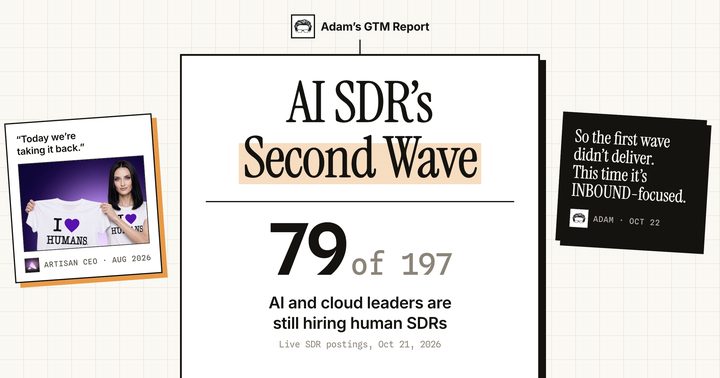
Software that performs SDR work, and how it changes the human SDR role.
AI SDR share fell sharply from April to July, then recovered unevenly; the last 30 days are up 11.9%, while the last 90 remain down 11.4%. September’s Ami launch explicitly challenged earlier automation without sound ICPs or offers, and Clay’s October announcement emphasized agents that learn from results. Together, they frame the recovery around better campaign judgment and execution.
Posts to understand this
Inside AI SDR
| Brand | GTM Index | |
|---|---|---|
| 1 | Clay | 93 |
| 2 | Salesforce | 94 |
| 3 | HubSpot | 90 |
| 4 | Claude Code | 99 |
| 5 | Vercel | 62 |
| 6 | Exa.ai | 49 |
| 7 |  Monaco | 29 |
| 8 | Primer | 30 |
| 9 | ElevenLabs | 56 |
| 10 | Instantly | 65 |
Growth driven by people using the product before they talk to sales.
Product-led growth’s share fell from 1.95% in April to 1.30% in October, despite an August rebound; the last 30 days are down 8.2%. No single event explains the decline: the posts show self-service alongside sales, from Clay’s combined growth motions to Metronome’s self-serve launch and 1up’s case for faster buyer answers.
Posts to understand this
Inside Product-Led Growth
| Brand | GTM Index | |
|---|---|---|
| 1 | HubSpot | 90 |
| 2 | Salesforce | 94 |
| 3 | Clay | 93 |
| 4 | Claude Code | 99 |
| 5 | Primer | 30 |
| 6 | Codex | 84 |
| 7 | Ahrefs | 50 |
| 8 | FullEnrich | 44 |
| 9 | Ploy | 31 |
| 10 | Intercom | 43 |
How revenue teams give agents the knowledge, memory and context they need to work.
Context Engineering rose through June, then declined every completed month through October; its last-30-day share is down 30%. The posts suggest a shift from explaining the concept to embedding it in broader systems: Charlie Hills frames context as part of harness engineering, Henry Hund routes local transcripts into his context layer, and Seth London describes plans for asynchronous GTM agents.
Posts to understand this
Inside Context Engineering in GTM
| Brand | GTM Index | |
|---|---|---|
| 1 | Claude Code | 99 |
| 2 | Clay | 93 |
| 3 | Grok Bot | 76 |
| 4 | Codex | 84 |
| 5 | Cursor (Anysphere) | 77 |
| 6 | Salesforce | 94 |
| 7 | ZoomInfo | 51 |
| 8 | Clearskies | 23 |
| 9 | HubSpot | 90 |
| 10 | Lovable | 61 |
Low-quality AI content and the fight to make automated work worth reading.
AI slop stayed near 2% of conversation through June, then lost share despite an August bump; the last 30 days are down 14.2%. No single event explains the decline: the posts move from complaints about empty output and authenticity policing toward practical Claude setup, templates, and governance.
Posts to understand this
Inside AI Slop
| Brand | GTM Index | |
|---|---|---|
| 1 | Claude Code | 99 |
| 2 | Grok Bot | 76 |
| 3 | Apify | 52 |
| 4 | Codex | 84 |
| 5 | Exa.ai | 49 |
| 6 | HubSpot | 90 |
| 7 | Instantly | 65 |
| 8 | Substack | 51 |
| 9 | Vercel | 62 |
| 10 | Clay | 93 |
How people and agents share work, hand off tasks and make decisions together.
Conversation share peaked in May, held near 2.1–2.2% from July through September, then fell 45.3% over the last 30 days. September’s shared team bots and October’s AI coworkers with assigned managers show how agents are joining team workflows. Slack’s October post adds the argument that people bringing different perspectives to an agent can improve outcomes.
Posts to understand this · as of Oct 31
Inside Multi-Player AI
| Brand | GTM Index | |
|---|---|---|
| 1 | Claude Code | 99 |
| 2 | Clay | 93 |
| 3 | HubSpot | 90 |
| 4 | Salesforce | 94 |
| 5 | Grok Bot | 76 |
| 6 | Instantly | 65 |
| 7 | Vercel | 62 |
| 8 | Attio | 51 |
| 9 | n8n | 58 |
| 10 | Codex | 84 |
How teams track and control the cost of models, tokens and agent work.
Token Spend & Cost Controls climbed from March through July, then declined through September; the latest 30 days are down 40%. The posts do not identify a single cause for the retreat: Rippling’s spend console, cheaper open-weight models and Rob Litterst’s account of Harvey’s margin problems all keep the discussion focused on measuring usage and choosing models by cost.
Posts to understand this · as of Oct 28
 inMargin pressureRob Litterst reports Harvey’s margin deterioration and move toward open-weight AIPW
 inModel economicsPeter Walker connects rising token usage with model diversity and cheaper open weightsR
 inSpend visibilityRippling introduces AI Spend Console with usage data from OpenAI, Anthropic and Cursor
Inside Token Spend & Cost Controls
| Brand | GTM Index | |
|---|---|---|
| 1 | Claude Code | 99 |
| 2 | Salesforce | 94 |
| 3 | Cursor (Anysphere) | 77 |
| 4 | Clay | 93 |
| 5 | Grok Bot | 76 |
| 6 | Codex | 84 |
| 7 | Intercom | 43 |
| 8 | Devin | 38 |
| 9 | ElevenLabs | 56 |
| 10 | Gong | 64 |
The argument that agents and custom software will break the classic SaaS model.
SaaSpocalypse fell from 2.5% of conversation in April to roughly 1% in October, with a 31.5% decline over the last 30 days. The posts show the replacement argument meeting counterexamples: Intercom backs both Fin and its help desk, while Salesforce reports growing seats and agent usage. September’s “renaisaas” framing fits that pattern, though no single post explains the decline.
Posts to understand this
Inside SaaSpocalypse
| Brand | GTM Index | |
|---|---|---|
| 1 | Salesforce | 94 |
| 2 | Clay | 93 |
| 3 | HubSpot | 90 |
| 4 | Vercel | 62 |
| 5 | Nooks | 48 |
| 6 | Apify | 52 |
| 7 | Claude Code | 99 |
| 8 | Monaco | 29 |
| 9 | ZoomInfo | 51 |
| 10 | Cursor (Anysphere) | 77 |
The choice between building software internally and buying another product.
Build vs. Buy declined through July, held near 1% in August and September, then dropped in October; its last-30-day share is down 40.4%. No single event explains the curve. The posts make the tradeoffs concrete: AI’s dependence on existing systems, a Replit salesperson who builds missing tools, and a Reflector bug that exposes the cost of limited support.
Posts to understand this
Inside Build vs. Buy
| Brand | GTM Index | |
|---|---|---|
| 1 | Clay | 93 |
| 2 | Salesforce | 94 |
| 3 | HubSpot | 90 |
| 4 | Vercel | 62 |
| 5 | Apify | 52 |
| 6 | Monaco | 29 |
| 7 | Nooks | 48 |
| 8 | ZoomInfo | 51 |
| 9 | Cursor (Anysphere) | 77 |
| 10 | Exa.ai | 49 |
Ways to verify whether digital content or online activity came from a person or AI.
Proof of Human spiked to 1.1% in August as Anthropic explained its watermarking plans and marketers debated disclosure. September’s retreat and a 28.4% decline over the last 30 days fit a concentrated controversy rather than a sustained climb. The follow-up discussion centers on what watermarks actually establish and whether AI detection says anything useful about content quality.
Posts to understand this · as of Oct 26
Inside Proof of Human
| Brand | GTM Index | |
|---|---|---|
| 1 | Grok Bot | 76 |
| 2 | Claude Code | 99 |
| 3 | Codex | 84 |
| 4 | HeyGen | 32 |
| 5 | Instantly | 65 |
| 6 | Apify | 52 |
| 7 | Exa.ai | 49 |
| 8 | Higgsfield | 39 |
| 9 | HubSpot | 90 |
| 10 |  People Data Labs | 24 |
AI tools that write, edit, test and operate software alongside a human builder.
AI coding and coding agents declined from March through July, briefly recovered in August and slipped again in September; the last 30 days are down 11.7%. The releases and examples broaden what agents can do: ColdIQ’s ad operations, Notion workspaces defined in code, and Vercel’s durable execution. That expanding range has not produced sustained growth in conversation share.
Posts to understand this · as of Oct 30
| Brand | GTM Index | |
|---|---|---|
| 1 | Claude Code | 99 |
| 2 | Grok Bot | 76 |
| 3 | Codex | 84 |
| 4 | Cursor (Anysphere) | 77 |
| 5 | Clay | 93 |
| 6 | HubSpot | 90 |
| 7 | Lovable | 61 |
| 8 | Salesforce | 94 |
| 9 | Replit | 55 |
| 10 | Instantly | 65 |
The practice of helping a brand appear, earn citations and get recommended inside AI answers.
AEO held above 7% from May through July before losing share in August and September; the last 30 days show a 22.9% rebound. The posts trace a recurring debate over what earns AI visibility, from Ahrefs’ research to SEO fundamentals, with Ethan Smith’s report of broken ChatGPT attribution adding a concrete measurement problem to the latest discussion.
Posts to understand this · as of Oct 31
| Brand | GTM Index | |
|---|---|---|
| 1 | Profound | 53 |
| 2 | Ahrefs | 50 |
| 3 | Semrush | 47 |
| 4 | HubSpot | 90 |
| 5 | Clay | 93 |
| 6 | AirOps | 41 |
| 7 | Claude Code | 99 |
| 8 | Salesforce | 94 |
| 9 | Grok Bot | 76 |
| 10 | Lovable | 61 |
The frontier models and labs that provide the base layer for AI products.
Foundation models moved in waves, with July and September highs followed by a 47.3% decline over the last 30 days. The posts show several sources of attention: Anthropic’s Project Glasswing, permanent Sonnet 5 pricing, and OpenAI’s Google Cloud expansion. That mix supports a recurring product and distribution cycle, but does not explain September’s high on its own.
Posts to understand this · as of Oct 26
| Brand | GTM Index | |
|---|---|---|
| 1 | Claude Code | 99 |
| 2 | Codex | 84 |
| 3 | Grok Bot | 76 |
| 4 | Cursor (Anysphere) | 77 |
| 5 | Salesforce | 94 |
| 6 | Midjourney | 35 |
| 7 | Granola | 53 |
| 8 | OpenRouter | 52 |
| 9 | HubSpot | 90 |
| 10 | Vercel | 62 |
An open protocol that lets agents connect to a product's data, tools and actions.
MCP’s conversation share peaked in May, declined through August, briefly rose in September, then fell in October. Share is down 25.9% over the last 30 days, despite concrete product uses: Databox connects business context to analysis and actions, Monarch brings personal finances into assistants, and Framer lets agents edit sites.
Posts to understand this
| Brand | GTM Index | |
|---|---|---|
| 1 | HubSpot | 90 |
| 2 | Salesforce | 94 |
| 3 | Claude Code | 99 |
| 4 | Clay | 93 |
| 5 | Codex | 84 |
| 6 | Instantly | 65 |
| 7 | Cursor (Anysphere) | 77 |
| 8 | Grok Bot | 76 |
| 9 | Gong | 64 |
| 10 | Lovable | 61 |
Buying attention through paid search, paid social, display and other advertising channels.
Paid Media held near 2.2% from June through July, then reached 3.3% in October after a September dip; the last 30 days are up 45.6%. October’s posts combine Anthropic’s growth hiring, Claude workflows for Meta ads, and Northbeam’s report of higher Meta CPMs. That cluster gives the rise several concrete hooks across staffing, campaign operations, and cost pressure.
Posts to understand this
| Brand | GTM Index | |
|---|---|---|
| 1 | HubSpot | 90 |
| 2 | Claude Code | 99 |
| 3 | Clay | 93 |
| 4 | Salesforce | 94 |
| 5 | Instantly | 65 |
| 6 | Primer | 30 |
| 7 | Codex | 84 |
| 8 | Lovable | 61 |
| 9 | RB2B | 48 |
| 10 | Gong | 64 |
Measuring whether AI answers mention, cite and recommend a brand.
AI Visibility rebounded in October after September’s drop, with the last 30 days up 24.3%, though share remains below June’s high. The posts reveal a recurring debate rather than a clear October catalyst: Steve Toth argues for active optimization, Rand Fishkin challenges tracking reliability, and CheckThat’s launch questions whether measurement alone improves visibility.
Posts to understand this
| Brand | GTM Index | |
|---|---|---|
| 1 | Profound | 53 |
| 2 | AirOps | 41 |
| 3 | Semrush | 47 |
| 4 | Clay | 93 |
| 5 | HubSpot | 90 |
| 6 | Vercel | 62 |
| 7 | Ahrefs | 50 |
| 8 | Peec AI | 29 |
| 9 |  SparkToro | 28 |
| 10 | Instantly | 65 |
Email sent to people with no prior relationship to start a sales conversation.
Cold email's share peaked in May, fell through July, briefly steadied in August, then declined again through October. It's down another 13.4% over the last 30 days. Recent posts debate repeated outreach across the full market, warn about infrastructure failures as sending volume grows, and compare tools by time from research to first send.
Posts to understand this
| Brand | GTM Index | |
|---|---|---|
| 1 | Clay | 93 |
| 2 | Claude Code | 99 |
| 3 | Instantly | 65 |
| 4 | HubSpot | 90 |
| 5 | Prospeo | 54 |
| 6 | Salesforce | 94 |
| 7 | Smartlead | 46 |
| 8 | HeyReach | 54 |
| 9 | Grok Bot | 76 |
| 10 | AI Ark | 48 |
Finding, researching and qualifying the people and accounts a sales team should contact.
Prospecting’s share rose into May, fell through September with a brief August pause, then recovered in October. The last 30 days are up 22.3%, while the 90-day move remains down 17.3%. October posts frame the conversation around cheaper contact data, real-time list research and whether large LinkedIn networks translate into relationships.
Posts to understand this
| Brand | GTM Index | |
|---|---|---|
| 1 | Clay | 93 |
| 2 | Claude Code | 99 |
| 3 | HubSpot | 90 |
| 4 | Instantly | 65 |
| 5 | Salesforce | 94 |
| 6 | AI Ark | 48 |
| 7 | HeyReach | 54 |
| 8 | Prospeo | 54 |
| 9 |  Findymail | 44 |
| 10 | Gong | 64 |
How large organizations adopt AI, move beyond pilots and change how work gets done.
April’s high point included Mistral’s Workflows preview, with named customers already using it for critical processes. Share declined each month through September and is down 21.1% over the last 30 days; later posts center on trusted data and unrealized value, a recurring deployment problem rather than another discrete launch that explains the curve.
Posts to understand this · as of Oct 30
| Brand | GTM Index | |
|---|---|---|
| 1 | Salesforce | 94 |
| 2 | Claude Code | 99 |
| 3 | Clay | 93 |
| 4 | Grok Bot | 76 |
| 5 | HubSpot | 90 |
| 6 | Cursor (Anysphere) | 77 |
| 7 | Zapier | 53 |
| 8 | Codex | 84 |
| 9 | Nooks | 48 |
| 10 | Braze | 37 |
The team that runs go-to-market systems, processes, data and reporting across revenue functions.
RevOps declined from April through August, then held near 2.8% through October; the last 30 days are down 4.7%. That plateau contains a practical debate about what teams should build: Sara McNamara questions homemade SaaS replacements, Andy Mowat joins Inflection.io as CMO with RevOps, and Kyle Norton models pipeline through Salesforce in Claude.
Posts to understand this
 inBuild-versus-buy debateSara McNamara challenges RevOps teams rebuilding SaaS without accounting for maintenanceAM
 inLeadership moveAndy Mowat joins Inflection.io as CMO with responsibility for RevOpsKN
 inForecasting exampleKyle Norton uses Salesforce in Claude to model conversion rates and pipeline requirements
| Brand | GTM Index | |
|---|---|---|
| 1 | Salesforce | 94 |
| 2 | HubSpot | 90 |
| 3 | Clay | 93 |
| 4 | Claude Code | 99 |
| 5 | Instantly | 65 |
| 6 | Gong | 64 |
| 7 | n8n | 58 |
| 8 | Nooks | 48 |
| 9 | ZoomInfo | 51 |
| 10 | Codex | 84 |
The work of retaining customers, helping them succeed and expanding the relationship.
Customer success recovered modestly in October after September’s dip; the last 30 days are up 10.9%, against a 13.3% decline over 90. Across Rox’s renewal automation, Vanta’s unified sales leadership and Higgsfield’s embedded creatives, the recurring theme is expansion. Higgsfield’s account of a $99 subscription becoming a $6 million annual contract gives that theme a concrete October example.
Posts to understand this
| Brand | GTM Index | |
|---|---|---|
| 1 | Salesforce | 94 |
| 2 | HubSpot | 90 |
| 3 | Clay | 93 |
| 4 | Claude Code | 99 |
| 5 | Gong | 64 |
| 6 | Lovable | 61 |
| 7 | Vercel | 62 |
| 8 | Replit | 55 |
| 9 | ZoomInfo | 51 |
| 10 | Attio | 51 |
Voice and chat software that talks with buyers and customers.
Conversational AI’s share dipped slightly in April, climbed through August, then held nearly flat in September. The latest 30 days show a 14% increase, accompanied by October announcements spanning Mistral’s voice agent models and SDK, ElevenLabs’ speech-to-speech models, and Automation Anywhere’s agreement to acquire boost.ai. These examples pair new voice capabilities with a planned expansion into customer-facing conversations.
Posts to understand this · as of Oct 30
| Brand | GTM Index | |
|---|---|---|
| 1 | Grok Bot | 76 |
| 2 | HubSpot | 90 |
| 3 | Salesforce | 94 |
| 4 | Clay | 93 |
| 5 | ElevenLabs | 56 |
| 6 |  Docket | 33 |
| 7 | Attio | 51 |
| 8 |  Twilio | 43 |
| 9 |  Vapi | 25 |
| 10 |  Vector | 35 |
Cold calls, messages and coordinated outreach used to create new sales opportunities.
Cold Outbound lost share each month from May through September; the latest 5% lift over 30 days is a small recovery within that decline. No single event explains the curve. Nooks AI Sequencing and Origami illustrate the automation push, while Kyle Norton’s cold-call framework addresses a persistent obstacle: buyers who dismiss unfamiliar callers before the pitch starts.
Posts to understand this
| Brand | GTM Index | |
|---|---|---|
| 1 | Clay | 93 |
| 2 | Claude Code | 99 |
| 3 | HubSpot | 90 |
| 4 | Salesforce | 94 |
| 5 | Instantly | 65 |
| 6 | HeyReach | 54 |
| 7 | Prospeo | 54 |
| 8 |  BetterContact | 43 |
| 9 | Lemlist | 49 |
| 10 | Nooks | 48 |
Marketing programs that create and capture demand, then turn it into pipeline.
Demand generation’s share slid from 3.26% in April to 2.12% in October, with a brief August bounce; the last 30 days are up 6.5%. The evidence points to a recurring debate over what creates demand as AI changes how buyers find information. Webflow Campaigns adds a concrete launch, while Gerhardt questions content downloads and DiNardi argues GEO only captures existing demand.
Posts to understand this
| Brand | GTM Index | |
|---|---|---|
| 1 | HubSpot | 90 |
| 2 | Clay | 93 |
| 3 | Claude Code | 99 |
| 4 | Salesforce | 94 |
| 5 | Codex | 84 |
| 6 | Gong | 64 |
| 7 | Docket | 33 |
| 8 | Primer | 30 |
| 9 | Webflow | 48 |
| 10 | Smartlead | 46 |
The work of connecting marketing activity to pipeline and revenue.
Attribution rebounded in October after a summer decline, with share up 21.2% over the last 30 days. The posts give that recovery a concrete theme: AI answers make buyer influence harder to trace, from n8n’s self-reported attribution case to Eli Schwartz’s concerns about sharing inside Google AI Mode. Adam Holmgren supplies the broader argument: connect marketing to later pipeline without claiming causation.
Posts to understand this
| Brand | GTM Index | |
|---|---|---|
| 1 | HubSpot | 90 |
| 2 | Salesforce | 94 |
| 3 | Clay | 93 |
| 4 | Claude Code | 99 |
| 5 | Gong | 64 |
| 6 | Semrush | 47 |
| 7 | Docket | 33 |
| 8 | Grok Bot | 76 |
| 9 |  GrowthLoop | 29 |
| 10 | HeyReach | 54 |
Sales and marketing coordinating around a defined set of target accounts.
ABM has stayed near 2% of conversation across most completed months, with a July dip and a modest recovery; the last 30 days are up 12.9%. The recurring pattern is practical account coordination: Clay’s earlier ads beta, complaints about legacy platforms, and an October multichannel playbook with reported closed-won revenue. This is steady attention to execution, without one dominant catalyst.
Posts to understand this
| Brand | GTM Index | |
|---|---|---|
| 1 | HubSpot | 90 |
| 2 | Clay | 93 |
| 3 | Salesforce | 94 |
| 4 | Instantly | 65 |
| 5 | 6sense | 43 |
| 6 | Claude Code | 99 |
| 7 | HeyReach | 54 |
| 8 |  Demandbase | 34 |
| 9 | Findymail | 44 |
| 10 | AI Ark | 48 |
Adding and verifying contact, company and buying-signal data used by go-to-market teams.
Data Enrichment declined from May through September before an October recovery; the last 30 days are up 15.7%, while the 90-day move remains negative. Gong Enrich gives the rebound a concrete product hook through embedded third-party data and automated updates. Earlier posts about Clay in ChatGPT and Gong’s RightBound acquisition establish the recurring pattern: enrichment inside existing work tools.
Posts to understand this
| Brand | GTM Index | |
|---|---|---|
| 1 | Clay | 93 |
| 2 | HubSpot | 90 |
| 3 | Claude Code | 99 |
| 4 | Instantly | 65 |
| 5 | HeyReach | 54 |
| 6 | RB2B | 48 |
| 7 | AI Ark | 48 |
| 8 | Findymail | 44 |
| 9 | Prospeo | 54 |
| 10 | n8n | 58 |
Mapping and winning the committee of people involved in a business purchase.
Buying-group discussion drifted lower after March, with a May rebound and a lower August–September plateau; the last 30 days are up 23.5%, despite a 20.4% decline over 90 days. The evidence shows a recurring operational concern, not one catalyst: Clay’s executive outreach, Gal Aga’s emphasis on internal consensus, and Jon Miller’s critique of automation built around individual leads.
Posts to understand this · as of Oct 28
| Brand | GTM Index | |
|---|---|---|
| 1 | HubSpot | 90 |
| 2 | Clay | 93 |
| 3 | Claude Code | 99 |
| 4 | Salesforce | 94 |
| 5 | Instantly | 65 |
| 6 | HeyReach | 54 |
| 7 | Nooks | 48 |
| 8 |  Influ2 | 28 |
| 9 | RB2B | 48 |
| 10 | 6sense | 43 |
Programmable tools used to build custom go-to-market systems, agents and automations.
GTM Developer Tools surged in May around concrete Claude Code workflows for connecting prospecting, enrichment, outreach, and CRM tools. Share faded through August, then recovered in September and October, with the last 30 days up 16%. The recurring hook is a buildable system: shared skills, tool connections, and full-stack playbooks such as Jan Rasmussen’s October example.
Posts to understand this
| Brand | GTM Index | |
|---|---|---|
| 1 | Clay | 93 |
| 2 | Prospeo | 54 |
| 3 | Claude Code | 99 |
| 4 | HubSpot | 90 |
| 5 | Instantly | 65 |
| 6 | FullEnrich | 44 |
| 7 | HeyReach | 54 |
| 8 | Findymail | 44 |
| 9 | BetterContact | 43 |
| 10 | RB2B | 48 |
The technical work that keeps outbound email out of spam and inside the inbox.
Deliverability peaked in May and moved unevenly lower through September; October recovered modestly, with share up 8.3% over the last 30 days but down 9.1% over 90 days. October’s posts pair Resend’s Forge launch and owned sending infrastructure with Tyler Denk’s checklist of ongoing deliverability work, without establishing that the launch caused the rebound.
Posts to understand this
| Brand | GTM Index | |
|---|---|---|
| 1 | HubSpot | 90 |
| 2 | Clay | 93 |
| 3 | Instantly | 65 |
| 4 | Claude Code | 99 |
| 5 | Salesforce | 94 |
| 6 | Prospeo | 54 |
| 7 | Smartlead | 46 |
| 8 | AI Ark | 48 |
| 9 | Codex | 84 |
| 10 | Lemlist | 49 |
The warehouses, pipelines and data models that keep customer and revenue data usable.
GTM Data Infrastructure peaked in June and lost share every completed month afterward, with another 13.4% decline over the last 30 days. The posts do not explain the June spike; their common thread is the work beneath AI adoption. Pocus and Apollo describe a unified platform, while Megan Bowen’s Mobi Solutions acquisition post emphasizes implementation, cleanup, migrations, and ongoing operations.
Posts to understand this
| Brand | GTM Index | |
|---|---|---|
| 1 | Clay | 93 |
| 2 | Salesforce | 94 |
| 3 | HubSpot | 90 |
| 4 | Claude Code | 99 |
| 5 | Instantly | 65 |
| 6 | Attio | 51 |
| 7 | Nooks | 48 |
| 8 | GrowthLoop | 29 |
| 9 | n8n | 58 |
| 10 | HeyReach | 54 |
Tools and workflows for generating video, avatars and synthetic presenters with AI.
AI video moved from roughly 1.3% in June and July to a two-month plateau near 2.1% in August and September. The posts give that higher level two concrete hooks: fal’s live generation demo and HeyGen’s research on owners’ reluctance to publish video; the last 30 days are down 29.5% despite Higgsfield’s OpenAI Marketplace announcement.
Posts to understand this · as of Oct 31
| Brand | GTM Index | |
|---|---|---|
| 1 | Higgsfield | 39 |
| 2 | Runway | 36 |
| 3 | HeyGen | 32 |
| 4 | ElevenLabs | 56 |
| 5 | Claude Code | 99 |
| 6 | Grok Bot | 76 |
| 7 | Canva | 50 |
| 8 | Replit | 55 |
| 9 | Apify | 52 |
| 10 | Clay | 93 |
People asking AI assistants for answers instead of using a traditional search engine.
AI search conversation peaked in June, declined through September, and is now essentially flat, down 0.6% over the last 30 days. The posts trace a change in emphasis: AutoRFP’s reported ChatGPT traffic gains give way to lost Google clicks and an October dispute over referral traffic as the yardstick. Measurement remains unsettled even as attention stabilizes below its earlier high.
Posts to understand this
| Brand | GTM Index | |
|---|---|---|
| 1 | Clay | 93 |
| 2 | Semrush | 47 |
| 3 | Salesforce | 94 |
| 4 | Profound | 53 |
| 5 | Ahrefs | 50 |
| 6 | HubSpot | 90 |
| 7 | Primer | 30 |
| 8 | SparkToro | 28 |
| 9 | 6sense | 43 |
| 10 |  CallRail | 24 |
Tests and benchmarks used to judge whether a model or agent works well enough.
Evals and benchmarks reached their highest share in July, settled near 2.1% in August and September, then fell in October; the last 30 days are down 34%. The supplied posts do not explain July’s peak. They show a dispersed conversation across benchmark integrity, simple model probes and Optimizely’s marketing benchmark, without a shared event that sustained the summer level.
Posts to understand this
| Brand | GTM Index | |
|---|---|---|
| 1 | Claude Code | 99 |
| 2 | Codex | 84 |
| 3 | Grok Bot | 76 |
| 4 | Clay | 93 |
| 5 | Cursor (Anysphere) | 77 |
| 6 | OpenRouter | 52 |
| 7 |  Cline | 31 |
| 8 | Devin | 38 |
| 9 | ElevenLabs | 56 |
| 10 | HubSpot | 90 |
How buyers search and how marketers plan, measure and improve organic discovery.
Search Strategy peaked in June, declined through September, and is up 28.3% over the last 30 days. The posts trace a shift from AI-run content operations to scrutiny of citation metrics, then practical advice for discovery across Google and ChatGPT. That evolving playbook gives the conversation continuity; no single launch explains the curve.
Posts to understand this · as of Oct 30
| Brand | GTM Index | |
|---|---|---|
| 1 | Claude Code | 99 |
| 2 | Ahrefs | 50 |
| 3 | AirOps | 41 |
| 4 | Semrush | 47 |
| 5 | Codex | 84 |
| 6 | Grok Bot | 76 |
| 7 | HubSpot | 90 |
| 8 | Instantly | 65 |
| 9 |  Ranked AI | 32 |
| 10 |  Similarweb | 30 |
Selling large, complex deals through long cycles, procurement, security review and many stakeholders.
Enterprise sales fell from its May high, briefly recovered in August, and settled into a lower September–October range; the last 30 days are down 5.3%. The recurring thread is how companies win upmarket: Clay highlights sellers with varied backgrounds and seven-figure deals, while Higgsfield describes enterprise demand within its consumer base.
Posts to understand this
 inSeller examplesVarun Anand profiles three Clay sellers who closed over $1M in enterprise dealsAM
 inUpmarket shiftHiggsfield describes its move from individual creators into enterprise visual productionC
 inRole designClay profiles an enterprise seller spanning account sales, post-sales, and renewals
| Brand | GTM Index | |
|---|---|---|
| 1 | Salesforce | 94 |
| 2 | Cursor (Anysphere) | 77 |
| 3 | HubSpot | 90 |
| 4 | Clay | 93 |
| 5 | Gong | 64 |
| 6 | Instantly | 65 |
| 7 | 6sense | 43 |
| 8 | Claude Code | 99 |
| 9 | FullEnrich | 44 |
| 10 |  Klaviyo | 38 |
Recording and analyzing customer calls to improve coaching, deal execution and revenue decisions.
Conversation Intelligence has an uneven curve: a June dip, July rebound and another recovery in October, with share up 26.1% over the last 30 days. No single event explains those swings; the recurring pattern is putting call transcripts to work. Outreach’s October Deal Agent post extends that pattern from discovery audits and RevOps analysis into recommended CRM updates and deal summaries.
Posts to understand this
| Brand | GTM Index | |
|---|---|---|
| 1 | Gong | 64 |
| 2 | Salesforce | 94 |
| 3 | Clay | 93 |
| 4 | HubSpot | 90 |
| 5 | Claude Code | 99 |
| 6 | Vercel | 62 |
| 7 | n8n | 58 |
| 8 |  Salesloft | 39 |
| 9 | Instantly | 65 |
| 10 | Zapier | 53 |
The positioning, messaging, launches, competitive work and sales tools owned by product marketing.
Product marketing fell sharply after March, held roughly steady in May–June and then drifted lower; the last-30-day move is down 7.9%. April’s concrete news concerned the marketing engineer role at Profound and Google, with agents taking on competitive tracking and sales materials. The later defense of PMM’s launch work shows a recurring debate over who owns the work, not a single event behind the decline.
Posts to understand this · as of Oct 27
| Brand | GTM Index | |
|---|---|---|
| 1 | Claude Code | 99 |
| 2 | Clay | 93 |
| 3 | Salesforce | 94 |
| 4 | HubSpot | 90 |
| 5 | Ploy | 31 |
| 6 | Vercel | 62 |
| 7 | Codex | 84 |
| 8 | Cursor (Anysphere) | 77 |
| 9 |  Customer.io | 38 |
| 10 | Gong | 64 |
The choice of go-to-market motion and the plan for making it work.
GTM Strategy settled near 1.3% in September and October after its May high, with the last 30 days still down 3.8%. No single event accounts for the decline. The posts show a more specific debate about who does the work and who buys: Swan AI’s agent workflows, Notion’s builder-led account ownership, and May Petry’s questions about agent buyers.
Posts to understand this
| Brand | GTM Index | |
|---|---|---|
| 1 | Clay | 93 |
| 2 | HubSpot | 90 |
| 3 | Claude Code | 99 |
| 4 | Gong | 64 |
| 5 | Nooks | 48 |
| 6 | AI Ark | 48 |
| 7 | Demandbase | 34 |
| 8 | Findymail | 44 |
| 9 | BetterContact | 43 |
| 10 | Instantly | 65 |
The debate over AI risk, alignment, regulation and responsible development.
AI Safety jumped from 0.80% in August to 1.98% in September, alongside Mercor’s $5 million safety fund and Microsoft’s responsible AI transparency report. Its share is down 38.4% over the last 30 days but remains above the March–August range. ElevenLabs’ Karnataka agreement extends the thread into a concrete government safety framework and voice AI pilots.
Posts to understand this · as of Oct 31
| Brand | GTM Index | |
|---|---|---|
| 1 | Claude Code | 99 |
| 2 | Codex | 84 |
| 3 | Grok Bot | 76 |
| 4 | Attio | 51 |
| 5 | Cursor (Anysphere) | 77 |
| 6 | Granola | 53 |
| 7 | Midjourney | 35 |
| 8 | OpenClaw | 48 |
| 9 |  Parallel | 34 |
| 10 | Salesforce | 94 |
The training, fine-tuning and modeling work underneath AI products.
Machine Learning rose steadily from June through September, with Skild AI’s one-example robot model and World Labs’ move to AMD as concrete late-summer news. The last 30 days are down 25.9%, despite Meta’s detailed Prometheus training update. The evidence shows continued technical releases and hardware investment, but does not identify a cause for the recent decline.
Posts to understand this · as of Oct 30
| Brand | GTM Index | |
|---|---|---|
| 1 | Claude Code | 99 |
| 2 | Codex | 84 |
| 3 | Grok Bot | 76 |
| 4 | HubSpot | 90 |
| 5 | Baseten | 44 |
| 6 | Midjourney | 35 |
| 7 |  Modal | 39 |
| 8 | Together AI | 34 |
| 9 | Clay | 93 |
| 10 | Cline | 31 |
Agents that prospect, enrich data, send outreach and update revenue systems.
Revenue Agents’ share fell from 3.04% in April to 1.01% in August, then edged up in September and October; the L30 gain of 4% points to a modest recovery. April’s Fin sales role, September’s Ami outbound launch, and October’s reported Nooks customer gains give the curve concrete context, while share remains down 31.9% over 90 days.
Posts to understand this
| Brand | GTM Index | |
|---|---|---|
| 1 | Clay | 93 |
| 2 | Salesforce | 94 |
| 3 | Claude Code | 99 |
| 4 | Nooks | 48 |
| 5 | HubSpot | 90 |
| 6 | Exa.ai | 49 |
| 7 | Lovable | 61 |
| 8 |  Sumble | 34 |
| 9 |  Attention | 28 |
| 10 | Clearskies | 23 |
B2B brands paying creators and independent voices to reach trusted audiences.
Creator partnerships jumped in October after September’s dip, with conversation share up 92.1% over the last 30 days. The evidence points to accumulating commercial proof rather than one October announcement: Limelight reported $3 million paid to creators in September, followed by an October account of a creator reaching six figures in brand deals.
Posts to understand this
| Brand | GTM Index | |
|---|---|---|
| 1 | Clay | 93 |
| 2 | HubSpot | 90 |
| 3 | ElevenLabs | 56 |
| 4 | Primer | 30 |
| 5 | AirOps | 41 |
| 6 | Ploy | 31 |
| 7 | beehiiv | 51 |
| 8 | Ahrefs | 50 |
| 9 | Claude Code | 99 |
| 10 | FullEnrich | 44 |
How companies sell to other companies and how business buyers make decisions.
B2B Sales discussion peaked in May, eased unevenly through September, then recovered in October. Share is up 21.8% over the last 30 days but down 15.8% over 90. The selected posts focus on earning trust before vendor evaluation, understanding buyers’ problems before pitching, and meeting face to face as buyers tire of generic AI outreach.
Posts to understand this
| Brand | GTM Index | |
|---|---|---|
| 1 | HubSpot | 90 |
| 2 | Claude Code | 99 |
| 3 | Clay | 93 |
| 4 | Salesforce | 94 |
| 5 | 6sense | 43 |
| 6 | Optimizely | 33 |
| 7 | Substack | 51 |
| 8 | Airtable | 47 |
| 9 | Apify | 52 |
| 10 |  Bombora | 30 |
How companies create demand, build trust and reach buyers at other businesses.
B2B marketing fell from March’s high, briefly steadied in spring, then settled lower through September; the last 30 days are down 6.1%. No single event explains the decline. Across the posts, the recurring discussion is how to earn distribution and trust through owned audiences, AI search visibility, creators, and employees beyond the founder.
Posts to understand this · as of Oct 30
| Brand | GTM Index | |
|---|---|---|
| 1 | HubSpot | 90 |
| 2 | Clay | 93 |
| 3 | Salesforce | 94 |
| 4 | Customer.io | 38 |
| 5 | Ahrefs | 50 |
| 6 | Claude Code | 99 |
| 7 | Optimizely | 33 |
| 8 | Primer | 30 |
| 9 | Demandbase | 34 |
| 10 | Webflow | 48 |
How sales leaders hire, organize, coach and manage teams against a revenue target.
April and May formed a high plateau before a sharp June drop, with share lower again by September and down 5.2% over the last 30 days. No single event accounts for the retreat; the posts return to durable management questions, from Replit’s demand for hands-on leaders to talent recognition and longer rep tenure.
Posts to understand this · as of Oct 30
| Brand | GTM Index | |
|---|---|---|
| 1 | Salesforce | 94 |
| 2 | HubSpot | 90 |
| 3 | Clay | 93 |
| 4 | Gong | 64 |
| 5 | Claude Code | 99 |
| 6 | Attio | 51 |
| 7 | BetterContact | 43 |
| 8 | Codex | 84 |
| 9 | Demandbase | 34 |
| 10 | ElevenLabs | 56 |
Starting and running a business, including the economics and experience of the founder path.
Entrepreneurship’s August bounce coincided with YouSpot’s solo CRM launch and Alex Lieberman’s bootstrapped hiring update, but September gave back ground and the last 30 days are down 22.3%. No single event explains the decline; the recurring thread is business economics, from tools for one-person operators to Tally’s $6 million ARR with ten people.
Posts to understand this · as of Oct 24
| Brand | GTM Index | |
|---|---|---|
| 1 | Clay | 93 |
| 2 | HubSpot | 90 |
| 3 | Claude Code | 99 |
| 4 | HeyReach | 54 |
| 5 | Instantly | 65 |
| 6 | Smartlead | 46 |
| 7 | Codex | 84 |
| 8 | Grok Bot | 76 |
| 9 | OpenClaw | 48 |
| 10 | Zapier | 53 |
Scoring leads and accounts to decide who deserves attention first.
Lead scoring’s share peaked in May, fell through September, then recovered in October, with the last 30 days up 40.6%. October posts cover scoring for routing and timing, connecting scores to outreach, and combining fit with intent. The recovery remains modest against the longer decline: share is still down 42.9% over the last 90 days.
Posts to understand this
| Brand | GTM Index | |
|---|---|---|
| 1 | HubSpot | 90 |
| 2 | Clay | 93 |
| 3 | Instantly | 65 |
| 4 | Salesforce | 94 |
| 5 | Claude Code | 99 |
| 6 | Gong | 64 |
| 7 | HeyReach | 54 |
| 8 | Lemlist | 49 |
| 9 | Prospeo | 54 |
| 10 | RB2B | 48 |
Planning, producing and distributing useful content to attract and educate buyers.
Content marketing held near 2% in May and June, then contracted sharply by September; the last 30 days show a 9.3% recovery. The recent thread is a rethink of volume and distribution: Sara Stella Lattanzio argues for original ideas, Kieran Flanagan points to creators at HubSpot and Clay, and Mark Jung emphasizes trust before purchase.
Posts to understand this
 inBudget argumentMark Jung argues content earns trust before buyers begin formal evaluationKF
 inDistribution shiftKieran Flanagan points to HubSpot and Clay creator programs as content alternativesSS
 inEditorial disciplineSara Stella Lattanzio advocates original ideas and distribution strategy over posting quotas
| Brand | GTM Index | |
|---|---|---|
| 1 | Claude Code | 99 |
| 2 | Clay | 93 |
| 3 | Customer.io | 38 |
| 4 | Grok Bot | 76 |
| 5 | Semrush | 47 |
| 6 | Codex | 84 |
| 7 | Optimizely | 33 |
| 8 | Profound | 53 |
| 9 | Substack | 51 |
| 10 | Ahrefs | 50 |
The durable knowledge and memory an agent can use across tasks and sessions.
Agent memory and context share has declined each month since June, with the last 30 days down 22%. ZoomInfo’s October Workbounce acquisition did not coincide with a monthly recovery. Across that deal, warehouse advice and local meeting transcripts, the recurring subject is how to put usable business context into agents; these posts do not explain the broader loss of share.
Posts to understand this
| Brand | GTM Index | |
|---|---|---|
| 1 | Claude Code | 99 |
| 2 | Clay | 93 |
| 3 | Grok Bot | 76 |
| 4 | Salesforce | 94 |
| 5 | ZoomInfo | 51 |
| 6 | Clearskies | 23 |
| 7 | Cursor (Anysphere) | 77 |
| 8 | Codex | 84 |
| 9 | Gong | 64 |
| 10 |  Octave | 32 |
A discipline built around experiments, channels and loops that drive efficient growth.
Growth marketing’s March high followed Clay Ads’ late-February launch, which supplied concrete acquisition results: LinkedIn CPL fell from $250 to $25. Share then settled well below March, with a September bounce and a 13% decline over the last 30 days. Later posts debate GTM engineering’s role while Anthropic’s hiring brief retains performance, lifecycle and SEO responsibilities.
Posts to understand this · as of Oct 31
| Brand | GTM Index | |
|---|---|---|
| 1 | Clay | 93 |
| 2 | Claude Code | 99 |
| 3 | HubSpot | 90 |
| 4 | Primer | 30 |
| 5 | Ploy | 31 |
| 6 | Ahrefs | 50 |
| 7 | Codex | 84 |
| 8 | Grok Bot | 76 |
| 9 | Optimizely | 33 |
| 10 |  Passionfroot | 23 |
Predicting revenue from the pipeline and managing the commitments behind that forecast.
Forecasting peaked in May, then lost share unevenly through September; the last 30 days are down another 28.1%. No single event explains that retreat: the posts pair ROX and HockeyStack’s revenue-agent announcements with Chris Orlob’s practical warning about a $40,000 deal. The recurring issue is whether automated forecasts or buyer commitments can be trusted.
Posts to understand this · as of Oct 26
| Brand | GTM Index | |
|---|---|---|
| 1 | Salesforce | 94 |
| 2 | HubSpot | 90 |
| 3 | Clay | 93 |
| 4 | Gong | 64 |
| 5 | Claude Code | 99 |
| 6 | Intercom | 43 |
| 7 |  Fireflies | 39 |
| 8 | Instantly | 65 |
| 9 |  LeanData | 34 |
| 10 | Lovable | 61 |
Training, coaching, playbooks and content that help sales reps perform better.
Sales enablement’s July high gave way to a September low, followed by an October recovery; the last 30 days are up 13.4%, but the last 90 remain down 31.2%. No single launch explains that shape. The recurring thread is practical rep improvement: Vanta’s reported Hyperbound results, business acumen training, and Todd Busler’s push for coaching and deal execution over playbook revisions.
Posts to understand this
| Brand | GTM Index | |
|---|---|---|
| 1 |  Highspot | 29 |
| 2 | Gong | 64 |
| 3 | Claude Code | 99 |
| 4 |  Seismic | 29 |
| 5 | Clay | 93 |
| 6 | Customer.io | 38 |
| 7 | HubSpot | 90 |
| 8 |  Mutiny | 31 |
| 9 | Salesforce | 94 |
| 10 | Salesloft | 39 |
Founders, executives and employees using their own voices to distribute the company's ideas.
Executive and employee social held a steady April–August plateau, dipped in September, then recovered in October; the last 30 days are up 49.1%. The recurring thread is people as a distribution channel: Clay reported 4,756 livestream registrations from one post, while October examples paired Wispr Flow’s founder content with an argument for participation across the company.
Posts to understand this
| Brand | GTM Index | |
|---|---|---|
| 1 | Clay | 93 |
| 2 | Apify | 52 |
| 3 | HubSpot | 90 |
| 4 | Instantly | 65 |
| 5 | Claude Code | 99 |
| 6 | HeyReach | 54 |
| 7 | Lovable | 61 |
| 8 | AirOps | 41 |
| 9 | Chili Piper | 36 |
| 10 | Exa.ai | 49 |
Engineers embedded with customers to make complex AI products work in the customer's environment.
Conversation share peaked in May, declined through September, then rebounded in October; the last 30 days are up 66.8%, still below May’s peak. Recent posts pair concrete deployment work, including custom integrations and team training, with debate over what qualifies as forward deployed engineering and how much autonomy those engineers have.
Posts to understand this
 inDeployment workStackAI pairs its platform with engineers building custom integrations and training customer teamsDK
 XDefinition challengeKellogg shares former Palantir leads’ critique of what gets called FDES
 XEngineer autonomySierra shares a post highlighting autonomy for its forward deployed engineers
| Brand | GTM Index | |
|---|---|---|
| 1 | Salesforce | 94 |
| 2 | Claude Code | 99 |
| 3 | Braze | 37 |
| 4 | Nooks | 48 |
| 5 | Cursor (Anysphere) | 77 |
| 6 | Gong | 64 |
| 7 | HubSpot | 90 |
| 8 | AirOps | 41 |
| 9 | Clay | 93 |
| 10 | Codex | 84 |
A go-to-market operating model where agents execute work across the revenue motion.
October lifted Agentic GTM above its uneven spring and summer levels, with conversation share up 53.8% over the last 30 days. The posts trace a shift from redesigning marketing teams to building execution infrastructure: Clay raised $115 million for its revenue-engine ambitions, and Hightouch added message delivery so lifecycle teams can run campaigns end to end.
Posts to understand this
| Brand | GTM Index | |
|---|---|---|
| 1 | Clay | 93 |
| 2 | HubSpot | 90 |
| 3 | Salesforce | 94 |
| 4 | Attio | 51 |
| 5 | Claude Code | 99 |
| 6 | ZoomInfo | 51 |
| 7 | 6sense | 43 |
| 8 | Apollo.io | 50 |
| 9 | RB2B | 48 |
| 10 |  Rox | 32 |
Growing through partners, channels, co-marketing, co-selling, resellers and other shared routes to market.
Partner conversation settled at a higher level in August, held through September, and advanced again in October; the last 30 days are up 30.7%. Repeated ecosystem announcements fit that sustained pattern: Lovable formalized agency and builder partnerships, Sierra introduced its partner ecosystem, and Bloomreach added Aurum Advisory for retail data commercialization.
Posts to understand this
| Brand | GTM Index | |
|---|---|---|
| 1 | Clay | 93 |
| 2 | HubSpot | 90 |
| 3 | Salesforce | 94 |
| 4 | Gong | 64 |
| 5 | HeyReach | 54 |
| 6 | Instantly | 65 |
| 7 | BetterContact | 43 |
| 8 | Claude Code | 99 |
| 9 | Findymail | 44 |
| 10 | Lovable | 61 |
AI agents that discover, compare and buy products on a person's behalf.
Agents as Buyers lost share through much of spring and summer, recovered in September, and is up 31.1% over the last 30 days. Recent posts supply a clear cluster of commerce announcements: Muse checkout through Shopify’s Shop Pay and Claude Duet purchases through Link’s agent wallet. Marketing discussion now has specific payment integrations to respond to.
Posts to understand this · as of Oct 30
| Brand | GTM Index | |
|---|---|---|
| 1 | Salesforce | 94 |
| 2 |  Browserbase | 33 |
| 3 | Claude Code | 99 |
| 4 | Grok Bot | 76 |
| 5 | 1mind | 38 |
| 6 | Cline | 31 |
| 7 | Exa.ai | 49 |
| 8 | OpenRouter | 52 |
| 9 | Semrush | 47 |
| 10 | Substack | 51 |
The point where a product solves a real need for a market that will buy it.
Product-Market Fit declined from April through July, then settled into a narrower range; share is now up 7.5% over the last 30 days. No single event explains that stabilization. The recurring question is what counts as proof: Lovable’s need to re-earn fit, deeptech’s different funding timelines, or Rahul Jain’s paying customers and profitability after a pivot.
Posts to understand this
| Brand | GTM Index | |
|---|---|---|
| 1 | Clay | 93 |
| 2 |  Viktor | 34 |
| 3 | Cursor (Anysphere) | 77 |
| 4 | Gamma | 45 |
| 5 | Grok Bot | 76 |
| 6 | HubSpot | 90 |
| 7 | Lemlist | 49 |
| 8 | Primer | 30 |
| 9 | Salesforce | 94 |
| 10 | Ahrefs | 50 |
The software stack marketers use to plan, run, measure and improve their work.
Martech’s share roughly halved from May to October, interrupted by an August bounce; the last 30 days are nearly flat, down 0.7%. The posts offer a recurring architecture debate rather than a single explanation for the decline: Brinker questions the accumulated stack, Chernov warns of agent bloat, and Habib argues watermarking policies belong in marketing infrastructure.
Posts to understand this
 inArchitecture proposalScott Brinker’s Databricks report explores a unified data foundation for martechJC
 inComplexity warningJoe Chernov warns that specialized AI agents can recreate software bloatMH
 inGovernance argumentMay Habib argues watermarking policies will become marketing infrastructure requirements
| Brand | GTM Index | |
|---|---|---|
| 1 | Salesforce | 94 |
| 2 | HubSpot | 90 |
| 3 | Braze | 37 |
| 4 | GrowthLoop | 29 |
| 5 | Docket | 33 |
| 6 | Influ2 | 28 |
| 7 | Clay | 93 |
| 8 |  Hightouch | 32 |
| 9 |  Hootsuite | 21 |
| 10 | Klaviyo | 38 |
The team that owns marketing systems, campaign execution, data and reporting.
Marketing operations lost share from March through July, briefly recovered in August, then fell again in September; the last 30 days show a 9.4% lift. Across that decline, the posts repeatedly question the old operating model: Profound describes marketing engineers, Conversion launches agents, and Jon Miller challenges legacy automation. That is a recurring debate about roles and execution, without a single catalyst for the recent lift.
Posts to understand this · as of Oct 29
| Brand | GTM Index | |
|---|---|---|
| 1 | HubSpot | 90 |
| 2 | Salesforce | 94 |
| 3 | Clay | 93 |
| 4 | GrowthLoop | 29 |
| 5 | Claude Code | 99 |
| 6 |  Conversion | 28 |
| 7 | Docket | 33 |
| 8 | Vercel | 62 |
| 9 | Grok Bot | 76 |
| 10 | LeanData | 34 |
Pricing based on what a customer uses, such as credits, tokens or transactions.
Usage & Consumption Pricing reached its high in May, when ElevenLabs cut developer prices and added pay-as-you-go, then settled into a lower summer range. October brought renewed attention, with the last 30 days up 17.4%. You.com’s pay-as-you-go Inference Router and a discussion of Databricks’ usage-pricing experience give that recovery concrete examples across product offers and revenue strategy.
Posts to understand this
| Brand | GTM Index | |
|---|---|---|
| 1 | Salesforce | 94 |
| 2 | Claude Code | 99 |
| 3 | Clay | 93 |
| 4 | HubSpot | 90 |
| 5 | Gong | 64 |
| 6 | Cursor (Anysphere) | 77 |
| 7 | Intercom | 43 |
| 8 | Nooks | 48 |
| 9 | ZoomInfo | 51 |
| 10 | Braze | 37 |
AI agents that create, launch, buy and optimize advertising.
AI-driven advertising climbed from April through August, paused in September, then reached a higher October level; share is up 53.5% over the last 30 days. The posts show a sequence rather than one catalyst: ChatGPT ads access and AirOps support, small-team production examples, and Roadway's cross-platform campaign setup and proactive optimization.
Posts to understand this
| Brand | GTM Index | |
|---|---|---|
| 1 | HubSpot | 90 |
| 2 | Lovable | 61 |
| 3 | Claude Code | 99 |
| 4 | Grok Bot | 76 |
| 5 | Salesforce | 94 |
| 6 |  Tealium | 21 |
| 7 | AirOps | 41 |
| 8 | Clay | 93 |
| 9 | Codex | 84 |
| 10 |  Criteo | 22 |
Reusable instructions that teach an agent how to complete a specific kind of task.
Agent Skills reached its highest full-month share in May, alongside practical examples such as Claude Code skills for managing ad campaigns. Vercel’s August Agent Plugins launch and October’s OKR skill show continued releases and reuse, but share kept shrinking. The last 30 days are down 14.2%, so useful examples have not sustained the earlier attention.
Posts to understand this
| Brand | GTM Index | |
|---|---|---|
| 1 | Claude Code | 99 |
| 2 | Clay | 93 |
| 3 | Codex | 84 |
| 4 | HubSpot | 90 |
| 5 | Grok Bot | 76 |
| 6 | Apify | 52 |
| 7 | Exa.ai | 49 |
| 8 | Firecrawl | 40 |
| 9 | HeyReach | 54 |
| 10 | Nooks | 48 |
Command-line tools that let people and agents run go-to-market work without a dashboard.
CLI conversation reached its highest monthly share in July, when Clay launched its API and CLI, then declined through October; the last 30 days are down 25.1%. The posts move from a $200,000 monthly ad-spend workflow to a product launch and an everyday GTM stack, so the cooling conversation still contains concrete operating examples.
Posts to understand this
| Brand | GTM Index | |
|---|---|---|
| 1 | Claude Code | 99 |
| 2 | Clay | 93 |
| 3 | HubSpot | 90 |
| 4 | Codex | 84 |
| 5 | n8n | 58 |
| 6 | Instantly | 65 |
| 7 | Apify | 52 |
| 8 | Exa.ai | 49 |
| 9 | Grok Bot | 76 |
| 10 | AI Ark | 48 |
Rules, triggers and workflows that execute marketing programs across systems.
Marketing automation fell from April to June, recovered through September, then eased in October; the last 30 days are up just 1.4%. September’s critique of automated offers that ignore buyer readiness sits alongside October examples of ad analysis and raffle email workflows. The conversation pairs concrete execution gains with questions about whether automated campaigns respond to what customers need.
Posts to understand this
| Brand | GTM Index | |
|---|---|---|
| 1 | HubSpot | 90 |
| 2 | Salesforce | 94 |
| 3 | Braze | 37 |
| 4 | Apollo.io | 50 |
| 5 | Clay | 93 |
| 6 | Conversion | 28 |
| 7 | Claude Code | 99 |
| 8 | Instantly | 65 |
| 9 | Lemlist | 49 |
| 10 | Semrush | 47 |
Websites and docs structured so AI crawlers and agents can read and use them.
Machine-readable sites held a fairly steady spring baseline, faded through September, and are up 28.3% over the last 30 days, though still down over 90 days. The recurring debate is what actually helps models use a site: Webflow’s earlier growth account, disputed Google guidance, and rising searches for agent optimization tactics. Soulo’s October post adds renewed interest, with effectiveness still an open question.
Posts to understand this · as of Oct 26
| Brand | GTM Index | |
|---|---|---|
| 1 | Grok Bot | 76 |
| 2 | Profound | 53 |
| 3 | Claude Code | 99 |
| 4 | Semrush | 47 |
| 5 | Vercel | 62 |
| 6 | Ahrefs | 50 |
| 7 | HubSpot | 90 |
| 8 | Peec AI | 29 |
| 9 |  Acquia | 22 |
| 10 | Clay | 93 |
The SDR and BDR function that creates pipeline through prospecting and outreach.
Sales development's share declined each month from May through September, and a 32.7% lift over the last 30 days still leaves it down 47.2% over 90 days. The posts frame a debate over the function's design, from failed AI replacement efforts to broader seller accountability. October's Clay and Notion AMA offers a practical hook: signals, automation, and more pipeline per rep.
Posts to understand this · as of Oct 28
| Brand | GTM Index | |
|---|---|---|
| 1 | Gong | 64 |
| 2 | HubSpot | 90 |
| 3 | Monaco | 29 |
| 4 |  Outreach | 43 |
| 5 | Salesforce | 94 |
| 6 | FullEnrich | 44 |
| 7 | Influ2 | 28 |
| 8 | Unify | 31 |
| 9 | Claude Code | 99 |
| 10 | Clay | 93 |
How marketing teams use AI, where it helps and how it changes the job.
AI in Marketing remained below April's level despite an August–September recovery, and its last-30-day share is down 25%; November's one-day reading is only early context. The posts trace a shift from Google's marketing-engineer hiring plans to Inflection's agent infrastructure pitch and Tejas Manohar's account of pilots that left marketing processes largely unchanged.
Posts to understand this
| Brand | GTM Index | |
|---|---|---|
| 1 | HubSpot | 90 |
| 2 | Claude Code | 99 |
| 3 | Grok Bot | 76 |
| 4 | Salesforce | 94 |
| 5 | Salesloft | 39 |
| 6 |  allGood | 19 |
| 7 | AirOps | 41 |
| 8 | Braze | 37 |
| 9 | Cursor (Anysphere) | 77 |
| 10 | Docket | 33 |
The territories, quotas, compensation plans, capacity models and reporting behind a sales organization.
Sales Ops has recovered some ground since September, with share up 23.2% over the last 30 days but still down 24.3% over 90 days. No single launch explains the turn; the posts share a compensation theme: whether quotas make commissions attainable, whether SDR incentives reward revenue, and where private companies offer seven-figure earnings.
Posts to understand this
| Brand | GTM Index | |
|---|---|---|
| 1 | Salesforce | 94 |
| 2 | Claude Code | 99 |
| 3 | Clay | 93 |
| 4 | Codex | 84 |
| 5 | Exa.ai | 49 |
| 6 | Gong | 64 |
| 7 | Nooks | 48 |
| 8 | Vercel | 62 |
| 9 | Cursor (Anysphere) | 77 |
| 10 | Devin | 38 |
Writing designed to persuade someone to click, reply, sign up or buy.
Copywriting lost share every completed month after June, and the last 30 days are down another 19.7%. The posts suggest a shift in framing rather than a single event: copy appears as one step inside broader GTM and creative workflows. Nolan Ong emphasizes judging audience fit, while Singulate and Hops place text production alongside audience research, segmentation, design, and review.
Posts to understand this
| Brand | GTM Index | |
|---|---|---|
| 1 | Claude Code | 99 |
| 2 | Clay | 93 |
| 3 | HubSpot | 90 |
| 4 | Instantly | 65 |
| 5 | n8n | 58 |
| 6 | AI Ark | 48 |
| 7 | Customer.io | 38 |
| 8 | Smartlead | 46 |
| 9 | BetterContact | 43 |
| 10 | Gong | 64 |
Companies that reorganize how they work around AI instead of stopping at a few AI features.
AI-pilled companies drew their highest share in April, held a lower plateau through summer, then slipped in September; the last 30 days are down 16.3%. No single launch explains the curve. The posts repeatedly test AI-native claims against operating realities: measurable growth, human sales and customer success teams, and career development as tools change.
Posts to understand this · as of Oct 31
| Brand | GTM Index | |
|---|---|---|
| 1 | Cursor (Anysphere) | 77 |
| 2 | Clay | 93 |
| 3 | HubSpot | 90 |
| 4 | Primer | 30 |
| 5 | Codex | 84 |
| 6 | Granola | 53 |
| 7 | Lovable | 61 |
| 8 | Vercel | 62 |
| 9 | Ahrefs | 50 |
| 10 | Claude Code | 99 |
The work of earning awareness, trust and preference for a company over time.
Brand building settled at a lower level after September’s sharp drop; the last 30 days are up 12.9%, but the last 90 remain down 31.3%. The posts repeatedly ask how brand earns budget when attribution misses its contribution. Fin’s awareness milestone offers a concrete outcome, while Peep Laja and Ramp’s experience expose the measurement problem behind the debate.
Posts to understand this
| Brand | GTM Index | |
|---|---|---|
| 1 | Optimizely | 33 |
| 2 | Clay | 93 |
| 3 | HubSpot | 90 |
| 4 | Salesforce | 94 |
| 5 | Supabase | 50 |
| 6 | Vercel | 62 |
| 7 | Ahrefs | 50 |
| 8 | Braze | 37 |
| 9 | Claude Code | 99 |
| 10 | Cursor (Anysphere) | 77 |
Using dinners, meetups, conferences and field events to build demand and trust in person.
Event conversation rebounded in October toward July–August levels, with share up 29.9% over the last 30 days but essentially flat over 90 days. The posts suggest recurring interest rather than one event-led spike: buyer trust, location-specific outreach, and practical attendance constraints keep face-to-face work in view; November's single day does not establish a breakout.
Posts to understand this
| Brand | GTM Index | |
|---|---|---|
| 1 | Salesforce | 94 |
| 2 | Clay | 93 |
| 3 | Lovable | 61 |
| 4 | HubSpot | 90 |
| 5 |  Aurasell | 18 |
| 6 | Primer | 30 |
| 7 | Substack | 51 |
| 8 | Vercel | 62 |
| 9 | 6sense | 43 |
| 10 |  Agency | 19 |
Deciding what to build, why it matters and which product bets come first.
Product strategy is up 16% over the last 30 days, but nearly flat over 90, a modest lift after August and September’s plateau. October’s evidence spans Automation Anywhere’s agreement to acquire boost.ai and Stena Line’s move to bring experimentation into product development. The common thread is broader product bets and better ways to choose them, rather than one defining event.
Posts to understand this
| Brand | GTM Index | |
|---|---|---|
| 1 | Clay | 93 |
| 2 | HubSpot | 90 |
| 3 | Claude Code | 99 |
| 4 | Salesforce | 94 |
| 5 | OpenRouter | 52 |
| 6 | Vercel | 62 |
| 7 | 1mind | 38 |
| 8 | Apify | 52 |
| 9 | ElevenLabs | 56 |
| 10 | Exa.ai | 49 |
Business software that exposes data and actions through APIs, MCP and command-line tools.
Salesforce’s Headless 360 announcement gives April’s sharp spike a clear event: access to Salesforce, Agentforce, and Slack through APIs, MCP, and CLI. Share faded through July, then recovered through September without a clear catalyst in these posts. The last 30 days are down 46.8%, even as Glean offers a concrete example of agent development inside existing coding tools.
Posts to understand this · as of Oct 26
| Brand | GTM Index | |
|---|---|---|
| 1 | Salesforce | 94 |
| 2 | HubSpot | 90 |
| 3 | Claude Code | 99 |
| 4 | Clay | 93 |
| 5 | Cursor (Anysphere) | 77 |
| 6 | Replit | 55 |
| 7 | Apify | 52 |
| 8 | Exa.ai | 49 |
| 9 | Vercel | 62 |
| 10 | ZoomInfo | 51 |
Salesforce's annual flagship conference, where the company and its ecosystem unveil products and court customers.
Dreamforce shows a clear event cycle: attention built in August, spiked in September, then fell sharply in October, with the last 30 days down 87.6%. Salesforce’s ClaudeForce partnership promotion, Informatica’s debut as part of the Salesforce family, and executive keynote recaps explain the September concentration. The decline fits that conference burst winding down.
Posts to understand this
 inPartnership promotionSalesforce promotes ClaudeForce discussions with Dario Amodei and Marc BenioffI
 inEcosystem debutInformatica announces its Dreamforce debut as part of the Salesforce familyLA
 inConference recapLiza Adams recaps AI adoption discussions with Salesforce, Anthropic, and Nvidia leaders
| Brand | GTM Index | |
|---|---|---|
| 1 | Salesforce | 94 |
| 2 | Clay | 93 |
| 3 | HubSpot | 90 |
| 4 | ZoomInfo | 51 |
| 5 | Common Room | 33 |
| 6 |  11x | 24 |
| 7 | 1mind | 38 |
| 8 |  AiSDR | 19 |
| 9 | Apify | 52 |
| 10 | Aurasell | 18 |
Protecting models and agents from prompt injection, data leaks, unsafe access and attacks.
AI Security held a relatively steady share from April through August, across Vanta’s AI-led growth story and OpenAI’s GPT-Red announcement. September broke that plateau; the last 30 days have recovered 20.1%, while the 90-day move remains down 31.2%. The evidence points to a recurring problem, governing increasingly autonomous agents, rather than one event that explains the recovery.
Posts to understand this
| Brand | GTM Index | |
|---|---|---|
| 1 | Claude Code | 99 |
| 2 | Midjourney | 35 |
| 3 | Codex | 84 |
| 4 | Grok Bot | 76 |
| 5 | Attio | 51 |
| 6 | Cursor (Anysphere) | 77 |
| 7 | ElevenLabs | 56 |
| 8 | Firecrawl | 40 |
| 9 |  Ghost | 18 |
| 10 | Hightouch | 32 |
Teams building internal software with AI instead of buying another SaaS product.
The conversation has narrowed since April, with a brief July rebound and a 42.2% decline over the last 30 days. The recurring theme is pushback on the economics of DIY software: April posts questioned rebuilding Slack and business-critical tools, while Sara McNamara’s September Granola example returned to maintenance, security, and opportunity cost.
Posts to understand this
| Brand | GTM Index | |
|---|---|---|
| 1 | Clay | 93 |
| 2 | Salesforce | 94 |
| 3 | HubSpot | 90 |
| 4 | Vercel | 62 |
| 5 | Apify | 52 |
| 6 | Monaco | 29 |
| 7 | Exa.ai | 49 |
| 8 | Nooks | 48 |
| 9 | ZoomInfo | 51 |
| 10 | 1mind | 38 |
Multi-step work planned and executed by agents instead of fixed automation rules.
Agentic workflows saw May and September bumps, but neither became a sustained rise; conversation share is down 25.7% over the last 30 days. HubSpot’s Agent Builder beta, Clay’s global agent unveiling, and Aurasell’s reported sales results show a recurring mix of launches and operating examples, without enough sustained attention to hold those gains.
Posts to understand this
| Brand | GTM Index | |
|---|---|---|
| 1 | HubSpot | 90 |
| 2 | Claude Code | 99 |
| 3 | Clay | 93 |
| 4 | 6sense | 43 |
| 5 | Instantly | 65 |
| 6 | Nooks | 48 |
| 7 | Salesforce | 94 |
| 8 | Salesloft | 39 |
| 9 | AI Ark | 48 |
| 10 | Codex | 84 |
Tracing and monitoring what a model or agent did during a production run.
Observability rose through August and September before an October retreat; the last 30 days are down 21.4%, despite a 14.1% gain over 90 days. September’s posts share a concrete theme: Databricks bundles observability with model access and controls, while CrewAI’s bank conversation exposes resistance to separate vendors. That supports a consolidation story, but does not explain the subsequent pullback.
Posts to understand this
| Brand | GTM Index | |
|---|---|---|
| 1 | Claude Code | 99 |
| 2 | LangChain | 45 |
| 3 | Codex | 84 |
| 4 | Salesforce | 94 |
| 5 | Browserbase | 33 |
| 6 | Clay | 93 |
| 7 |  CrewAI | 27 |
| 8 | Cursor (Anysphere) | 77 |
| 9 | Exa.ai | 49 |
| 10 | Grok Bot | 76 |
The software stack sales teams use to prospect, engage buyers and manage deals.
Sales tech stayed within a narrow range through June, then declined each month through September; the last 30 days show an 8.2% uptick against a 37.5% decline over 90 days. No single launch explains that shape. The recurring demand is for better connections and context: Airscale’s data APIs, coordinated sales workflows, and dialers that know when a call is poorly timed.
Posts to understand this · as of Oct 30
| Brand | GTM Index | |
|---|---|---|
| 1 | Salesforce | 94 |
| 2 | Clay | 93 |
| 3 | Gong | 64 |
| 4 | Braze | 37 |
| 5 | HubSpot | 90 |
| 6 | Lightfield | 28 |
| 7 | Nooks | 48 |
| 8 | OpenRouter | 52 |
| 9 | Seismic | 29 |
| 10 | ZoomInfo | 51 |
Companies reducing their go-to-market stack by replacing point tools with broader platforms.
May’s high had a concrete proof point: Gong reported growth above 55% and said customers were consolidating point solutions onto its platform. Conversation share then retreated, with the last 30 days down 24.7% despite Apollo’s AI GTM system reveal. The evidence shows a recurring platform expansion story, from Nooks’ sequencer to Apollo, but no single event explains the decline.
Posts to understand this · as of Oct 28
| Brand | GTM Index | |
|---|---|---|
| 1 | Salesforce | 94 |
| 2 | Clay | 93 |
| 3 | Gong | 64 |
| 4 | HubSpot | 90 |
| 5 | Claude Code | 99 |
| 6 | Common Room | 33 |
| 7 |  Fathom | 32 |
| 8 | Braze | 37 |
| 9 |  Clari | 32 |
| 10 | Codex | 84 |
Using AI to tailor outreach and marketing to each person at scale.
AI personalization’s share fell from 0.88% in April to roughly 0.34% in September and October; the last 30 days show a 16.3% pickup. The recurring thread is skepticism about personalization at scale, not a new product launch. Asay describes narrowing LaunchDarkly outreach to 50 accounts, Palasz distinguishes relevance from observations, and Barrows calls for researched emails with substance.
Posts to understand this
| Brand | GTM Index | |
|---|---|---|
| 1 | Clay | 93 |
| 2 | Salesforce | 94 |
| 3 | HubSpot | 90 |
| 4 | Braze | 37 |
| 5 | Claude Code | 99 |
| 6 | Exa.ai | 49 |
| 7 | Lemlist | 49 |
| 8 | Prospeo | 54 |
| 9 | Replit | 55 |
| 10 | Sumble | 34 |
Systems for producing and distributing large volumes of marketing content, often with AI.
Share peaked in May, declined through August, then held nearly flat in September; the posts do not establish a single cause for that retreat. They show a split conversation: Higgsfield and Figma offered production tools while Eli Schwartz warned about AI content spam. Those releases did not produce a sustained recovery, with share down 30.1% over the last 30 days.
Posts to understand this · as of Oct 31
| Brand | GTM Index | |
|---|---|---|
| 1 | Ahrefs | 50 |
| 2 | AirOps | 41 |
| 3 | Apify | 52 |
| 4 | Claude Code | 99 |
| 5 | Exa.ai | 49 |
| 6 | Granola | 53 |
| 7 | Lovable | 61 |
| 8 | Substack | 51 |
| 9 | Airtable | 47 |
| 10 | Apollo.io | 50 |
A shared revenue knowledge layer that people and agents can query and update.
June’s step up established a higher band of conversation through September, though the last 30 days are down 7.6%. No supplied post explains the initial jump; the recurring pattern is how teams own and share GTM context. July’s build-versus-buy debate now has concrete counterparts in ZoomInfo’s Workbounce acquisition and a Swan AI implementation.
Posts to understand this · as of Oct 30
 inContext acquisitionZoomInfo acquires Workbounce to bring unstructured GTM context into GTM.aiAC
 inImplementation exampleAriel Cohen describes shared account history, skills, and preferences in Swan AIˏB
 inOwnership frameworkBrendan Short outlines five tests for owning intelligence on vendor infrastructure
| Brand | GTM Index | |
|---|---|---|
| 1 | Claude Code | 99 |
| 2 | Instantly | 65 |
| 3 | Clay | 93 |
| 4 | Codex | 84 |
| 5 | Fireflies | 39 |
| 6 | HeyReach | 54 |
| 7 | HubSpot | 90 |
| 8 | Lovable | 61 |
| 9 | Parallel | 34 |
| 10 | Prospeo | 54 |
Buying, onboarding and expanding inside a product without talking to a salesperson.
Self-serve recovered into a July and August plateau, then lost share through October; the last 30 days are down 18.9%. The posts capture the tension behind that conversation: Metronome opened self-serve access, Elena Verna questioned enterprise priorities after the reported Airtable deal, and Cargo described customers needing help designing GTM systems. No single event explains the decline.
Posts to understand this
| Brand | GTM Index | |
|---|---|---|
| 1 | HubSpot | 90 |
| 2 | Clay | 93 |
| 3 | Salesforce | 94 |
| 4 | FullEnrich | 44 |
| 5 | Klaviyo | 38 |
| 6 | Primer | 30 |
| 7 | AI Ark | 48 |
| 8 | Ahrefs | 50 |
| 9 |  BuiltWith | 33 |
| 10 | Claude Code | 99 |
Systems where several agents divide a job, coordinate their work and combine the result.
Conversation share peaked in May and declined through September, with another 30.3% decline over the last 30 days. Workato’s Airo expansion, Mercor’s 100-plus-subagent run and ZoomInfo’s DoubleO.ai acquisition supplied concrete milestones without sustaining broader attention; their shared theme is reliable execution, evaluation and context, rather than agent count alone.
Posts to understand this · as of Oct 27
| Brand | GTM Index | |
|---|---|---|
| 1 | Claude Code | 99 |
| 2 | HubSpot | 90 |
| 3 | Clay | 93 |
| 4 | Salesforce | 94 |
| 5 | Grok Bot | 76 |
| 6 | n8n | 58 |
| 7 | Findymail | 44 |
| 8 | Firecrawl | 40 |
| 9 | HeyReach | 54 |
| 10 | Instantly | 65 |
Approval and review steps that keep a person involved in an agent's work.
Human in the Loop has an uneven curve, with May and August bumps followed by declines; the last 30 days are down 14%. Scott Brinker’s August post gives the second bump a concrete discussion about reviewer expertise and thinking time, but does not establish its cause. Across the posts, the recurring question is how to specify oversight through autonomy limits, permissions, approvals, and audit trails.
Posts to understand this · as of Oct 29
| Brand | GTM Index | |
|---|---|---|
| 1 | Clay | 93 |
| 2 | HubSpot | 90 |
| 3 | Claude Code | 99 |
| 4 | Instantly | 65 |
| 5 | Nooks | 48 |
| 6 | Salesforce | 94 |
| 7 | Codex | 84 |
| 8 | HeyReach | 54 |
| 9 | Outreach | 43 |
| 10 |  Pinecone | 32 |
Founders running early sales themselves before handing the motion to a sales team.
Founder-Led Sales rebounded from a May low to a July high, then eased through September; the last 30 days are roughly flat at -2.7%. Scott Leese’s July account of a $200,000 hire who closed no deals fits the recurring concern: founders must learn the sales motion before delegating it. September posts return to hiring judgment and basic sales education.
Posts to understand this · as of Oct 31
| Brand | GTM Index | |
|---|---|---|
| 1 | Claude Code | 99 |
| 2 | Clay | 93 |
| 3 | HubSpot | 90 |
| 4 | Salesforce | 94 |
| 5 | Passionfroot | 23 |
| 6 | Ploy | 31 |
| 7 | Primer | 30 |
| 8 | Sumble | 34 |
| 9 | 6sense | 43 |
| 10 | Codex | 84 |
The tools, data and workflows that turn outbound sales into a repeatable operating system.
Outbound systems rose from March to a May peak, then declined through September, with share down another 35.2% over the last 30 days. April’s signal-driven BDR workflow and August’s downloadable outbound skills show the systems pitch; October’s manual café prospecting offers a concrete counterpoint.
Posts to understand this · as of Oct 27
| Brand | GTM Index | |
|---|---|---|
| 1 | Clay | 93 |
| 2 | HubSpot | 90 |
| 3 | Salesforce | 94 |
| 4 | Grok Bot | 76 |
| 5 | Instantly | 65 |
| 6 | RB2B | 48 |
| 7 | Smartlead | 46 |
| 8 | AirOps | 41 |
| 9 | Attio | 51 |
| 10 | Cursor (Anysphere) | 77 |
Pricing tied to a delivered result, such as a resolution, meeting or completed task.
Conversation peaked in May, fell through August, then recovered in September and October, with share up 77.6% over the last 30 days. October posts focus on execution: Zendesk discusses what counts as a billable resolution, Ambience ties agreed metrics to financial commitments, and Intercom addresses forecasting spend when charges depend on outcomes.
Posts to understand this
| Brand | GTM Index | |
|---|---|---|
| 1 | Salesforce | 94 |
| 2 | Clay | 93 |
| 3 | HubSpot | 90 |
| 4 | Cursor (Anysphere) | 77 |
| 5 | FullEnrich | 44 |
| 6 | Intercom | 43 |
| 7 | Lovable | 61 |
| 8 |  Metronome | 25 |
| 9 |  UiPath | 27 |
| 10 | Vercel | 62 |
Choosing which model should run each task based on cost, quality, speed or risk.
Model routing rose from March through August, then held nearly flat in September as cost and infrastructure stories kept supplying reasons to discuss it. Devin Fusion promised lower costs, OpenRouter announced it was joining Stripe, and Harvey's reported margin troubles sharpened the economics argument. The last 30 days are down 59.7%, despite a positive 90-day move.
Posts to understand this · as of Oct 28
| Brand | GTM Index | |
|---|---|---|
| 1 | Cursor (Anysphere) | 77 |
| 2 | Lovable | 61 |
| 3 | Nooks | 48 |
| 4 | OpenRouter | 52 |
| 5 | Salesforce | 94 |
| 6 | Airtable | 47 |
| 7 | Claude Code | 99 |
| 8 | Common Room | 33 |
| 9 | ElevenLabs | 56 |
| 10 |  Factory AI | 15 |
A permanently free product tier designed to attract users and convert some to paid plans.
Freemium rebounded sharply from July’s low through September, with OpenAI’s August announcement of a $1 billion ChatGPT ads revenue run rate providing a concrete free-tier funding story. The last 30 days are down 38.8%, so that rebound has lost momentum. Across the posts, the recurring question is what pays for free access: ads, agent work or enterprise sales.
Posts to understand this · as of Oct 31
| Brand | GTM Index | |
|---|---|---|
| 1 | Salesforce | 94 |
| 2 | Codex | 84 |
| 3 | HubSpot | 90 |
| 4 | Ahrefs | 50 |
| 5 | Grok Bot | 76 |
| 6 | Attio | 51 |
| 7 | Claude Code | 99 |
| 8 | Cursor (Anysphere) | 77 |
| 9 | Fireflies | 39 |
| 10 |  Manus | 30 |
Marketing to existing leads and customers through onboarding, nurture, retention and expansion programs.
Lifecycle marketing’s share peaked in May, fell through August, then recovered modestly in September and October. The last 30 days are down 1.7%, suggesting that recovery has flattened. October posts focus on specific program changes: testing campaigns with simulated customers, rebuilding campaigns through chat tools, and extending existing customer journeys into Messenger.
Posts to understand this
| Brand | GTM Index | |
|---|---|---|
| 1 | HubSpot | 90 |
| 2 | Salesforce | 94 |
| 3 | Gong | 64 |
| 4 | GrowthLoop | 29 |
| 5 | Braze | 37 |
| 6 |  Calendly | 39 |
| 7 |  Centralize | 24 |
| 8 | Claude Code | 99 |
| 9 | Customer.io | 38 |
| 10 |  Default | 27 |
Go-to-market teams designed around AI from the start, with different roles, costs and speed.
AI-Native GTM’s May spike coincided with debate about GTM engineers and Replit’s mix of custom workflows, purchased infrastructure, and more sales hires. Attention then thinned, with share down 45.1% over 90 days and 3% over the last 30. Justin Norris’s move to lead GTM AI and automation at Zendesk adds a concrete enterprise role, without a broader rebound yet.
Posts to understand this
| Brand | GTM Index | |
|---|---|---|
| 1 | Clay | 93 |
| 2 | Lovable | 61 |
| 3 | Aurasell | 18 |
| 4 | HubSpot | 90 |
| 5 | Lightfield | 28 |
| 6 | Monaco | 29 |
| 7 | OpenRouter | 52 |
| 8 | Profound | 53 |
| 9 | Replit | 55 |
| 10 | Rox | 32 |
The online channel mix used to reach, convert and retain customers.
Digital marketing climbed through June, then fell through September; its 144.8% lift over the last 30 days still sits alongside a 39.5% decline over 90 days. No single launch explains the curve: Ahrefs’ Agent A supplied a spring product hook, while posts on SEO accountability and workflows.io’s multichannel funnel connect tools and channel choices to pipeline outcomes.
Posts to understand this · as of Oct 27
| Brand | GTM Index | |
|---|---|---|
| 1 | Ahrefs | 50 |
| 2 | Clay | 93 |
| 3 | Semrush | 47 |
| 4 | AirOps | 41 |
| 5 | Apollo.io | 50 |
| 6 | Baseten | 44 |
| 7 | Claude Code | 99 |
| 8 | Codex | 84 |
| 9 | Cursor (Anysphere) | 77 |
| 10 | Demandbase | 34 |
Writing and structuring the instructions a model follows.
Prompt engineering lost share from March through September, apart from a June rebound; the last 30 days now show a 16% lift against a 43.6% decline over 90 days. No single event explains that path. The posts share a critique: better prompts alone cannot fix missing context, unreliable rollouts, or recognizable AI writing patterns.
Posts to understand this · as of Oct 26
| Brand | GTM Index | |
|---|---|---|
| 1 | Claude Code | 99 |
| 2 | Codex | 84 |
| 3 | Salesforce | 94 |
| 4 | Fathom | 32 |
| 5 | Hermes Agent | 36 |
| 6 | HubSpot | 90 |
| 7 | Make | 37 |
| 8 | SparkToro | 28 |
| 9 | Viktor | 34 |
| 10 | Zapier | 53 |
The strategy of naming, defining and leading a new market.
Category creation held nearly flat from April through June, then lost ground despite an August bounce; conversation share is down another 10% over the last 30 days. The posts point to a recurring challenge rather than one decisive event: Kaminski puts buyer jobs before category names, Chernov questions AI-era category gatekeepers, and Laja sets strict conditions for an AI pivot.
Posts to understand this · as of Oct 25
| Brand | GTM Index | |
|---|---|---|
| 1 | Clay | 93 |
| 2 | HubSpot | 90 |
| 3 | Braze | 37 |
| 4 | Gong | 64 |
| 5 | Granola | 53 |
| 6 | Primer | 30 |
| 7 | Ahrefs | 50 |
| 8 |  AppsFlyer | 18 |
| 9 | Attio | 51 |
| 10 |  Bland | 19 |
Marketing inside large companies with bigger budgets, stricter governance and more complex brands.
Enterprise marketing built through July and August, then eased through October; its share is down 17.9% over the last 30 days. The posts show a shift from Kyle Lacy’s pipeline-focused hiring to WRITER’s systems argument and Iterable’s CustomerLake beta partnership with Databricks, but no single event explains the retreat.
Posts to understand this
| Brand | GTM Index | |
|---|---|---|
| 1 | HubSpot | 90 |
| 2 | Salesforce | 94 |
| 3 | AirOps | 41 |
| 4 | Aurasell | 18 |
| 5 |  Backstory | 18 |
| 6 | Braze | 37 |
| 7 |  Creatio | 18 |
| 8 | Grok Bot | 76 |
| 9 | Klaviyo | 38 |
| 10 | Lightfield | 28 |
Companies run mostly by AI agents with few or no people, measured in revenue per employee.
Conversation share fell from March to an August low despite Polsia’s reported $10 million run rate with one employee, then recovered in September; the last 30 days are up 11.9%. The recent evidence centers on operating detail: Swan describes one person running 126 GTM workflows, and AssemblyAI reports nearing $1 million ARR per employee, though share remains down 51.2% over 90 days.
Posts to understand this · as of Oct 28
| Brand | GTM Index | |
|---|---|---|
| 1 | Claude Code | 99 |
| 2 | Lovable | 61 |
| 3 |  Base44 | 23 |
| 4 | Canva | 50 |
| 5 |  Lusha | 28 |
| 6 | Salesforce | 94 |
| 7 | Twilio | 43 |
| 8 | beehiiv | 51 |
Advantages that grow stronger as more people, data or participants join a product.
Network effects lost conversation share every month from April through October, and the last 30 days remain down 38.1%. The posts frame a debate over defensibility, from Snapchat’s ecosystems and Threads’ inherited distribution to Martin Casado’s challenge to data-based network-effect claims; no single event explains the slide. November’s elevated first-day bar is early context, not evidence of a reversal.
Posts to understand this
| Brand | GTM Index | |
|---|---|---|
| 1 | HubSpot | 90 |
| 2 | Cursor (Anysphere) | 77 |
| 3 | ElevenLabs | 56 |
| 4 | Granola | 53 |
| 5 | Grok Bot | 76 |
| 6 | Replit | 55 |
| 7 | Attio | 51 |
| 8 | Chili Piper | 36 |
| 9 | Clay | 93 |
| 10 |  Close | 20 |
The sameness that appears when AI gives every company similar messaging, claims and websites.
April’s spike coincided with pointed criticism of formulaic ChatGPT posts, followed by monthly declines through September and an 8.3% drop over the last 30 days. The evidence shifts from broad warnings about interchangeable content toward a specific remedy: Diandra Escobar’s Claude skill supplies hook rules and examples where vague prompts produce sameness.
Posts to understand this · as of Oct 30
| Brand | GTM Index | |
|---|---|---|
| 1 | Apify | 52 |
| 2 | Claude Code | 99 |
| 3 | Clay | 93 |
| 4 | Exa.ai | 49 |
| 5 | Primer | 30 |
| 6 | Salesforce | 94 |
| 7 |  Sequel | 32 |
| 8 | Substack | 51 |
| 9 | ZoomInfo | 51 |
| 10 | beehiiv | 51 |
Agents hired, managed and sold as named workers, from AI coworkers to digital employees.
AI employees held a fairly steady share through summer after a May high, but conversation share is down 48.5% over the last 30 days. The evidence shows recurring product and distribution moves rather than one defining event: Viktor expanded from Slack to Teams after reporting $20 million in annualized revenue, and September brought an open-source company brain.
Posts to understand this · as of Oct 26
| Brand | GTM Index | |
|---|---|---|
| 1 | Clay | 93 |
| 2 | Granola | 53 |
| 3 |  Qualified | 27 |
| 4 | Vercel | 62 |
| 5 | Viktor | 34 |
| 6 | Warmly | 32 |
| 7 | beehiiv | 51 |
| 8 | 11x | 24 |
| 9 | 1mind | 38 |
| 10 | AiSDR | 19 |
How AI changes headcount, entry-level work and the jobs people still need to do.
The jobs conversation fell sharply after March, briefly recovered in May, then settled at a much lower share; the last 30 days are down 2%. The posts sustain a debate rather than identify one cause: OpenAI’s human SDR vacancy counters replacement claims, small-team revenue stories promote automation, and Kyle Lacy describes the strain of conflicting advice.
Posts to understand this · as of Oct 31
| Brand | GTM Index | |
|---|---|---|
| 1 | Clay | 93 |
| 2 | HubSpot | 90 |
| 3 | 11x | 24 |
| 4 | 1mind | 38 |
| 5 | Ahrefs | 50 |
| 6 | Conversion | 28 |
| 7 | Docket | 33 |
| 8 | ElevenLabs | 56 |
| 9 |  Framer | 30 |
| 10 | FullEnrich | 44 |
How sales teams use AI and how it changes the work of selling.
AI in Sales rebounded in May, then lost share through September, with a further 45.5% decline over the last 30 days. Recent posts examine the gap between promises and practice: rep workflows went largely unchanged, faster work did not improve revenue outcomes, and announced capabilities need separating from released features.
Posts to understand this · as of Oct 26
| Brand | GTM Index | |
|---|---|---|
| 1 | Clay | 93 |
| 2 | Mutiny | 31 |
| 3 | Salesforce | 94 |
| 4 | Aurasell | 18 |
| 5 | Clearskies | 23 |
| 6 | Codex | 84 |
| 7 | Cursor (Anysphere) | 77 |
| 8 | Gong | 64 |
| 9 | Grok Bot | 76 |
| 10 | HubSpot | 90 |
Time-limited access that lets a buyer test a product before paying.
Free Trial’s modest May-to-July recovery failed to regain March’s share, and the last 30 days are down 27%. The evidence centers on conversion mechanics: funnel benchmarks, compensation rules that delayed sales follow-up, and Sunsama’s option to restart an underused trial. No single event explains the decline; the recurring conversation is about making existing trials work better.
Posts to understand this · as of Oct 30
| Brand | GTM Index | |
|---|---|---|
| 1 | HubSpot | 90 |
| 2 | Canva | 50 |
| 3 | Claude Code | 99 |
| 4 | Clay | 93 |
| 5 | Gong | 64 |
| 6 | Intercom | 43 |
| 7 | Klaviyo | 38 |
| 8 |  Loops | 22 |
| 9 | Primer | 30 |
| 10 |  Resend | 30 |
The runtime around an agent that provides tools, state, controls and stopping rules.
Agent harnesses show bursts of attention rather than a sustained climb, with June and August highs followed by a 42.6% decline over the last 30 days. Observe.AI’s production controls discussion and Cloudflare’s runtime launch line up with those bursts. September’s GTM explainer extends the practical discussion, but the evidence offers no single cause for the retreat.
Posts to understand this · as of Oct 29
| Brand | GTM Index | |
|---|---|---|
| 1 | Claude Code | 99 |
| 2 | Codex | 84 |
| 3 | Cursor (Anysphere) | 77 |
| 4 | Clay | 93 |
| 5 |  GitHub Copilot | 36 |
| 6 | LangChain | 45 |
Embedded marks and signed metadata that show where digital content came from and how it was made.
August’s watermarking spike has a clear event anchor: Anthropic’s FAQ said it was implementing watermarking to comply with the EU AI Act, alongside broader discussion of provenance tools. Share dropped sharply in September, while the last 30 days are up 24.8%. Writer’s October post shifts the discussion toward enterprise control over how content is marked.
Posts to understand this · as of Oct 31
| Brand | GTM Index | |
|---|---|---|
| 1 | Codex | 84 |
| 2 | Claude Code | 99 |
| 3 | Grok Bot | 76 |
| 4 | Docket | 33 |
| 5 | Ghost | 18 |
| 6 | Granola | 53 |
| 7 | HeyGen | 32 |
| 8 | Higgsfield | 39 |
| 9 | HubSpot | 90 |
| 10 | Manus | 30 |
Rule-based software that moves business work through predefined steps and systems.
Workflow automation’s share peaked in April, then mostly declined through September, with a 62.4% drop over the last 30 days. Late-September posts focus on concrete recurring work: scoring leads as they enter Salesforce, turning purchase orders into validated carts, and generating briefs from schedules and files.
Posts to understand this · as of Oct 29
 inLead scoringJanis Zech describes scoring new Salesforce leads through always-on automationC
 inOrder processingConexiom previews converting incoming purchase orders into carts with validated parts and pricingA
 inBrief generationAirtable previews a workflow turning schedule data and files into AI-generated briefs
| Brand | GTM Index | |
|---|---|---|
| 1 | AI Ark | 48 |
| 2 | Claude Code | 99 |
| 3 | HubSpot | 90 |
| 4 | n8n | 58 |
| 5 | Clay | 93 |
| 6 | Codex | 84 |
| 7 | Findymail | 44 |
| 8 | HeyReach | 54 |
| 9 | Instantly | 65 |
| 10 | Make | 37 |
HubSpot's annual customer conference, where sales and marketing teams gather to network and learn.
HubSpot UNBOUND follows a clear event cycle: April’s rename announcement brought an initial spike, followed by a summer lull and a much larger September surge around the Boston conference. Partner Day drew over 1,300 partners, while booth commentary extended the discussion afterward. The 87.1% decline over the last 30 days fits that concentrated conference attention receding.
Posts to understand this · as of Oct 31
| Brand | GTM Index | |
|---|---|---|
| 1 | HubSpot | 90 |
| 2 | 1mind | 38 |
| 3 | Ahrefs | 50 |
| 4 | AirOps | 41 |
| 5 | Apify | 52 |
| 6 | AthenaHQ | 21 |
| 7 | Base44 | 23 |
| 8 |  Breeze | 22 |
| 9 | Claude Code | 99 |
| 10 | Clay | 93 |
Adopting and operating open AI models, including their licensing, deployment options, customization and costs.
Open Source AI spiked in July, when Together AI used RAISE Summit to argue for open inference economics, then receded through September. The last 30 days are down 8.1%. Bolt’s September Forge launch gave the topic a concrete usage-and-price story, while Christopher Lochhead argued about incumbent protection; neither coincided with a sustained return to July’s share.
Posts to understand this · as of Oct 30
| Brand | GTM Index | |
|---|---|---|
| 1 | Cline | 31 |
| 2 |  Groq | 25 |
| 3 | Baseten | 44 |
| 4 | Cursor (Anysphere) | 77 |
| 5 | ElevenLabs | 56 |
| 6 | Manus | 30 |
| 7 | Parallel | 34 |
| 8 | Salesforce | 94 |
| 9 | Substack | 51 |
| 10 | Vercel | 62 |
AI-native firms that sell finished work instead of software, delivered by agents and a small human team.
Services-as-Software held steady in May and June before dropping to a lower range, with the last 30 days down another 16.5%. Daydream’s $15 million Series A and Emergence Capital’s outcome-based services thesis supplied concrete early hooks. September’s Sequoia commentary revisited the investment case, but the curve shows no sustained return to the spring plateau.
Posts to understand this
| Brand | GTM Index | |
|---|---|---|
| 1 | Findymail | 44 |
| 2 | HeyReach | 54 |
| 3 | HubSpot | 90 |
| 4 | Pinecone | 32 |
| 5 | Supabase | 50 |
| 6 | n8n | 58 |
| 7 | AI Ark | 48 |
| 8 | Airtable | 47 |
| 9 | Apify | 52 |
| 10 | Browserbase | 33 |
Products distributed as apps or connectors inside AI assistants and agent marketplaces.
Connector talk held near 0.6% of conversation from June through August, then dropped in September; the last 30 days are down another 33.6%. The evidence shows continued product expansion rather than a single explanation for the decline: n8n added workflow creation, Zapier connected Claude for Small Business to 9,000+ tools, and fal brought media generation into assistants.
Posts to understand this · as of Oct 31
| Brand | GTM Index | |
|---|---|---|
| 1 | Cursor (Anysphere) | 77 |
| 2 | Claude Code | 99 |
| 3 | Codex | 84 |
| 4 | Salesforce | 94 |
| 5 | Exa.ai | 49 |
| 6 | HeyGen | 32 |
| 7 | HubSpot | 90 |
| 8 |  Lambda | 27 |
| 9 | Lovable | 61 |
| 10 | Replit | 55 |
AI-generated creators, avatars and user-style content used in marketing.
An April spike faded through August before September’s rebound; conversation share is now down 27.6% over the last 30 days. The posts do not explain April’s jump, but September paired HeyGen’s small-business video survey with a firsthand avatar trial. The recurring question is practical: can avatars help people publish, and do they feel convincing enough?
Posts to understand this · as of Oct 26
| Brand | GTM Index | |
|---|---|---|
| 1 | Grok Bot | 76 |
| 2 | Instantly | 65 |
| 3 | Apify | 52 |
| 4 | Claude Code | 99 |
| 5 | Exa.ai | 49 |
| 6 | HeyGen | 32 |
| 7 | People Data Labs | 24 |
| 8 | Gamma | 45 |
| 9 | Higgsfield | 39 |
| 10 | HubSpot | 90 |
The argument over requiring a form before someone can access useful content.
After May’s rebound, gated-content discussion thinned to an August–September plateau; the last 30 days are up 85.7%, but the 90-day move remains down 41.3%. The recurring argument is about when gates serve buyers: Amanda Natividad separates ideas from utility, Ashley Lewin reconsiders a blanket ban, and Andrei Zinkevich challenges gates used to manufacture marketing credit.
Posts to understand this · as of Oct 28
| Brand | GTM Index | |
|---|---|---|
| 1 | HubSpot | 90 |
| 2 | Apify | 52 |
| 3 | Clay | 93 |
| 4 | Claude Code | 99 |
| 5 | beehiiv | 51 |
| 6 | AI Ark | 48 |
| 7 | Attio | 51 |
| 8 | BuiltWith | 33 |
| 9 | Exa.ai | 49 |
| 10 | Firecrawl | 40 |
Independent advisors and fractional executives selling experience, judgment and hands-on help.
April’s high point paired a case for permanent fractional CMOs with Sangram Vajre’s launch of GTMEE for fractional GTM leaders. Share settled lower in May and June, then weakened further, with the last 30 days down 26.3%; the evidence points to periodic arguments for the model and tools for delivery, rather than a sustained launch cycle.
Posts to understand this · as of Oct 30
| Brand | GTM Index | |
|---|---|---|
| 1 | Salesforce | 94 |
| 2 | AirOps | 41 |
| 3 |  Consensus | 26 |
| 4 |  Factors.ai | 21 |
| 5 | Gamma | 45 |
| 6 | Gong | 64 |
| 7 | HubSpot | 90 |
| 8 | Lovable | 61 |
| 9 | Profound | 53 |
| 10 | Webflow | 48 |
The belief that spending more on model calls and agent work can create an advantage.
Tokenmaxxing’s share peaked in July, fell through August and September, and declined another 23.5% over the last 30 days. Criticism of spending as a success metric spans Sierra’s May argument for outcomes, Databricks’ August budget controls, and Dennis Sevilla’s October roundup of executives questioning returns. These posts document the criticism without establishing why attention fell.
Posts to understand this · as of Oct 29
| Brand | GTM Index | |
|---|---|---|
| 1 | Claude Code | 99 |
| 2 | Codex | 84 |
| 3 | Cursor (Anysphere) | 77 |
| 4 | Devin | 38 |
| 5 | Gamma | 45 |
| 6 | Grok Bot | 76 |
| 7 | HubSpot | 90 |
| 8 | Salesforce | 94 |
Software designed for agents to operate as the primary user.
Conversation emerged in June and expanded through August before a September dip; the last 30 days are up 82.2% from a small base. The recent evidence gives that rise concrete substance: Lorikeet launched agent traffic detection, CHEQ reported a traffic surge after consumer agent launches, and posts examined Amazon and Cloudflare restrictions on agent access.
Posts to understand this · as of Oct 30
| Brand | GTM Index | |
|---|---|---|
| 1 | Attio | 51 |
| 2 | Claude Code | 99 |
| 3 | Grok Bot | 76 |
| 4 | Midjourney | 35 |
| 5 | Canva | 50 |
| 6 | Cartesia | 29 |
| 7 | Vercel | 62 |
Pushback against AI from customers, workers and the public, and brands repositioning as pro-human.
AI backlash follows bursts of argument rather than a sustained climb: May was the strongest month, August brought another bump, and the last 30 days are down 57.5%. May’s posts pit consumer skepticism against business enthusiasm and career opportunity; September’s billboard graffiti adds a concrete flashpoint, but the evidence does not explain August’s bump or the latest decline.
Posts to understand this · as of Oct 31
| Brand | GTM Index | |
|---|---|---|
| 1 | Primer | 30 |
| 2 | 11x | 24 |
| 3 | 1mind | 38 |
| 4 | AiSDR | 19 |
| 5 | Apify | 52 |
| 6 | Braze | 37 |
| 7 | Claude Code | 99 |
| 8 | Clay | 93 |
| 9 | Cursor (Anysphere) | 77 |
| 10 | Docket | 33 |
The plan, act, inspect and retry cycle an agent follows until it finishes.
Agent loops reached a June high and stayed close in July, when Palantir launched Agent Engine and Agent SDK. The later posts show competing views: a warning about automated outbound’s human cost and a pitch for systems that act, observe, and iterate. Neither establishes why attention faded, but share declined through September and is down 48.8% over the last 30 days.
Posts to understand this · as of Oct 31
| Brand | GTM Index | |
|---|---|---|
| 1 | Replit | 55 |
| 2 | Attio | 51 |
| 3 | Claude Code | 99 |
| 4 | Clay | 93 |
| 5 | Cursor (Anysphere) | 77 |
| 6 |  Deepline | 35 |
| 7 | Salesforce | 94 |
Brands use human authorship and craft as a reason to trust or value their work.
Human-made claims show intermittent bursts, with a May high and another build through July and August, rather than a sustained climb; the last 30 days are down 67.3%. The examples span Dave Gerhardt’s case for human craft, GTM Skills’ launch with 200-plus human-crafted skills, and Contentful’s human-made, agent-ready message alongside Mercedes-Benz and Deloitte Digital.
Posts to understand this · as of Oct 28
| Brand | GTM Index | |
|---|---|---|
| 1 | Clay | 93 |
| 2 | Clearskies | 23 |
| 3 | Attention | 28 |
| 4 |  Clarify | 29 |
| 5 | Grok Bot | 76 |
| 6 | Nooks | 48 |
| 7 | Rox | 32 |
| 8 | Sumble | 34 |
| 9 | Claude Code | 99 |
| 10 | Codex | 84 |
Tools that estimate whether text was written by AI by analyzing its style and statistical patterns.
AI detection spiked in July and stayed elevated in August, when LinkedIn’s “AI slop” reporting feature put human judgment and detector reliability up for debate. Attention dropped sharply in September and is down another 19.4% over the last 30 days. Semrush’s analysis of 42,000 posts adds a search-performance angle, but the summer debate has lost momentum.
Posts to understand this · as of Oct 29
| Brand | GTM Index | |
|---|---|---|
| 1 | Substack | 51 |
| 2 | Fathom | 32 |
| 3 |  Grammarly | 28 |
| 4 | Lightfield | 28 |
| 5 | Replit | 55 |
Interfaces that let agents understand and operate software built for human users.
Agent interfaces spiked in May, dropped in June, then rebounded in July before easing through September; conversation share is down 48.4% over the last 30 days. July’s rebound coincided with a batch of agent-callable releases from Clay, HubSpot, Webflow and others. Salesforce’s experience-layer tease and Hightouch’s shopping connector extended that product thread without sustaining July’s share.
Posts to understand this · as of Oct 26
| Brand | GTM Index | |
|---|---|---|
| 1 | Browserbase | 33 |
| 2 | Claude Code | 99 |
| 3 | Exa.ai | 49 |
| 4 | Resend | 30 |
| 5 | Salesforce | 94 |
| 6 |  StackAdapt | 23 |
| 7 | Vercel | 62 |
Marketing that builds demand through credible proof, useful work and long-term audience relationships.
Trust-based marketing has a small, uneven curve: June and July held similar share, August dropped, and September recovered part of the loss. No single launch explains it; the recurring argument is that familiarity, organizational consistency, and human connection earn credibility. Acquia repeated that theme in October, while share is down 72.2% over the last 30 days.
Posts to understand this · as of Oct 31
Using product activity to identify, time and support sales opportunities.
Product-led sales remains a tiny, intermittent conversation, with an 87.1% decline over the last 30 days after small August and September appearances. The posts suggest absorption into broader platforms: Brendan Short’s March account describes Pocus joining Apollo and the standalone category’s retreat, while August’s HubSpot implementation shows product signals still at work inside an established CRM.
Posts to understand this
How model costs, services and agent work put pressure on software gross margins.
This is a sparse conversation, with a brief April high of 0.031% and zero-share months in May and July. The current L30 move is down 60%, and the evidence remains split between lower AI gross margins and a services model where smaller engagements can unlock a larger market.
Posts to understand this · as of Oct 9
Claude Code is Anthropic's coding agent for writing, testing and shipping code from a terminal or IDE.
Claude Code lost share every completed month from March through September, but the last 30 days are up 11.3%. The posts capture competing pressures rather than a single cause: code becomes an upstream workspace, while terminal friction frustrates a noncoding user. Vercel’s October durable-harness launch adds a concrete infrastructure development alongside the recent uptick, with support for recovery after failures.
Posts to understand this · as of Oct 30
Cursor is an AI code editor with agents that write, edit and review code.
Cursor’s August spike coincided with its announcement that SpaceX had closed the acquisition, before share fell in September and October. The last 30 days are down 15.4%, consistent with a deal-driven burst that faded. September’s report of Nvidia using Cursor supplied an adoption example, but did not sustain August’s level of attention.
Posts to understand this
Clay is a flexible data and workflow platform for enrichment, research and automated go-to-market work.
Clay’s share declined from May through September before recovering in October; conversation is up 24.3% over the last 30 days, though still down over 90 days. October supplied concrete reasons for renewed attention: Clay’s self-learning revenue agent mission, Eric Nowoslawski’s return to build its content program, and practical stack discussions that place Clay alongside Claude Code.
Posts to understand this
n8n is an open-source workflow automation tool that combines visual steps, code and AI agents.
n8n’s share rose through June, fell through September and edged up in October, with the last 30 days up 18.2% but the last 90 down 36.9%. Recent posts describe trigger-based automation, Coresignal data workflows and cognee memory integrations. They establish ongoing workflow use and promotion, but do not explain the rebound.
Posts to understand this
Lovable is an AI app builder that turns plain-language prompts into working software.
Lovable’s March high had a concrete community hook: a free build day with Anthropic and a firsthand account of a 14-year-old launching an app after a sponsored event. Share declined through July, then recovered to roughly 1% in August–September. MotherDuck’s web analysis adds a broader adoption reference, but the last-30-day move is down 6.4%.
Posts to understand this · as of Oct 27
Replit is an AI development platform that builds, deploys and runs applications from a prompt.
Replit’s May high gave way to a lower summer range, followed by declines in September and October; the last 30 days are down 13.5%. Its London office and Runway integration supplied fresh announcements, while a September post revisited the SaaStr database incident, but these posts do not establish a single cause for the slide.
Posts to understand this
OpenClaw is a self-hosted agent that remembers context and works across chat apps and local tools.
OpenClaw’s high March–April share followed news of creator Peter Steinberger joining OpenAI and included DeepSeek’s April integration update and API discount. Share then declined every completed month through September, with no single setback identified in the posts. The last-30-day decline is now just 5.9%, while Salesforce’s October reference treats OpenClaw as an origin point for personal agents.
Posts to understand this · as of Oct 27
Codex is OpenAI's coding agent for planning, writing, testing and shipping software changes.
Codex rose through spring, then held near 3% of conversation from May through September; its latest 30-day share is down 10.6%. April posts paired fast demo creation with Salesforce’s Headless 360 support, consistent with interest across individual builders and enterprise tools. Vercel’s October durable-harness launch extends that tooling pattern, but has not prevented the recent loss of share.
Posts to understand this · as of Oct 28
Hermes Agent is an open-source personal agent that keeps memory and learns reusable skills across tasks.
Hermes Agent's October recovery follows a decline from May through September, with share up 32.6% over the last 30 days but down 54.7% over 90 days. Microsoft Store availability and Tavily's built-in search give the recovery concrete product context after April's Higgsfield integration; November's single observed day cannot establish a new peak.
Posts to understand this
Salesforce is the enterprise CRM for managing sales, service, marketing and customer data.
Salesforce’s share peaked near 4.8% in April, settled around 4% through summer, then returned to 4.8% in September. The posts span Fin’s June acquisition agreement, Informatica’s September Dreamforce debut within Salesforce, and Braze’s October acquisition agreement. Those announcements provide a recurring acquisition and integration thread, but the latest direction is down: share fell 17.2% over the last 30 days.
Posts to understand this · as of Oct 27
HubSpot is a CRM and go-to-market platform for marketing, sales, service and content.
HubSpot’s share slid from May through August, then recovered modestly through October; the last 30 days are up 8.9%. The Warmly acquisition announcement did not sustain June’s attention, while October brought two distinct threads: layoffs and Claude workflows connected to HubSpot deals. That mix supports a recovery in conversation, without a single clear driver.
Posts to understand this
Gong records and analyzes sales conversations to improve coaching, deal execution and forecasting.
Gong’s share fell from April into a relatively steady August-to-October range, although the last 30 days are down 5.5%. Its May announcement of $500 million in ARR and 55%+ annual growth did not halt the broader decline. October posts show a quieter, practical thread: Gong calls as inputs for churn prediction and Userled’s agents.
Posts to understand this
Vercel is a platform for deploying web applications and the infrastructure used by AI agents.
Vercel’s share has seesawed, with an August high, a September pullback and an October recovery; the last 30 days are up 24.9%. The evidence points to repeated distribution and workflow extensions rather than one sustained launch cycle: Grok connectors, Acquia’s Drupal integration and GTM workflows using a Vercel Eve agent. The 90-day gain is just 2.4%.
Posts to understand this
Claude Cowork is Anthropic's general-purpose agent for research, documents and other knowledge work.
Claude Cowork’s share fell every month from March through September, with another 39% decline over the last 30 days. No single event explains that sustained loss of attention: the posts pair practical Cowork workflows for marketing assets and email with Tom Wentworth’s argument for Claude Code’s broader capabilities. Useful examples persist without a visible recovery in conversation share.
Posts to understand this · as of Oct 31
Instantly is a cold-email platform for finding leads, managing inboxes and running outbound campaigns.
Instantly’s share climbed through June, dropped in July and held nearly flat in August; the last 30 days show a 16.5% recovery. The posts point to a recurring pattern rather than one launch: Claude Code hooks load sequences into Instantly, agents route replies into Slack and Attio, and operators still need specialists for deliverability and follow-up.
Posts to understand this · as of Oct 30
OpenRouter is one API for accessing, routing and paying for models from many providers.
OpenRouter built share through the spring and summer, spiked in August, then returned near July’s level in September; the last 30 days are up 16.4%. The posts do not explain August’s spike, but show a recurring thread of model access and usage: Poolside adds endpoints, OpenAI overtakes Anthropic in weekly user spend, and ClickHouse describes OpenRouter’s infrastructure scale.
Posts to understand this · as of Oct 31
Substack is a publishing platform for newsletters, podcasts and paid creator subscriptions.
Substack’s uneven spring gave way to lower share, with a brief July lift before declines in August and September; the last 30 days are down 30.4%. The posts suggest a split in creator needs rather than one decisive event. Elena Verna values newsletter ownership, Adam Schoenfeld explains his move to beehiiv for customization, and Karlie Kloss launches on Substack.
Posts to understand this · as of Oct 25
Semrush is an SEO and content platform for search research, competitive analysis and AI visibility.
Semrush’s share more than doubled from April to June, then fell sharply through August; the last 30 days are essentially flat, down 0.4%. The Lovable partnership supplies a concrete event during the spring rise, though it does not explain June’s high alone. Later posts center on rank-tracking continuity and Spotlight’s visibility debate, consistent with a smaller, steady conversation.
Posts to understand this
Canva is a visual design platform for creating graphics, presentations, video and other marketing assets.
Canva recovered in October after a broad decline from April through September; its last-30-day share is up 29.8%, although the 90-day move remains down 24.2%. October’s posts give that recovery a concrete theme: Claude creates editable Canva decks through MCP, and HeyGen turns deck notes into avatar presentations. Grok’s May connector announcement shows the integration thread predates the rebound.
Posts to understand this
Ahrefs is an SEO platform for keyword research, backlinks, rank tracking and AI visibility.
Ahrefs jumped in May and stayed elevated in June before settling lower; the last 30 days are down 19.5%. May’s posts gave it concrete roles in AI visibility tracking and authority audits, while July brought a claim that prompts could replace paid SEO dashboards. The pattern is a debate over Ahrefs’ place in AI search, without a single documented catalyst.
Posts to understand this
Zapier connects applications and automates work through triggers, actions and AI agents.
Zapier’s May high gave way to a lower baseline by September; the last 30 days are down another 2%. The posts show a recurring role as infrastructure for AI workflows, from shared-context GTM agents to trigger-based renewal prep. Its October SpaceX Super Intelligence launch-partner announcement adds a concrete event, but no single post explains the broader decline.
Posts to understand this · as of Oct 31
ZoomInfo provides B2B contact, company and intent data for sales and marketing teams.
ZoomInfo’s share fell from March through September, interrupted by a June lift; the last 30 days are up 29.9%, while the last 90 remain down 33.7%. The selected posts frame ZoomInfo as both a replacement target for Ava and Moltsets and a data supplier for Exa’s agents, without establishing what caused the recent rebound.
Posts to understand this · as of Oct 29
Profound measures and improves how brands appear in AI answers.
Profound’s conversation has oscillated within a narrow range, with a September rebound followed by an October dip and a 20.4% decline over the last 30 days. The evidence mixes criticism of content quality and measurement reliability with an enterprise speaker lineup for Zero Click Singapore. No single event explains the curve, and the October event announcement accompanied lower monthly share.
Posts to understand this
ElevenLabs provides voice models and agents for speech, dubbing and conversational AI.
ElevenLabs recovered from its August low through September and October, with conversation up 31.8% over the last 30 days. The evidence points to several sources of momentum: a reported $600 million ARR milestone, substantial enterprise sales hiring, and ElevenLabs v4 in Adobe Firefly. That mix gives the rise commercial and product substance beyond a single announcement.
Posts to understand this
Attio is a flexible CRM with a database-style model, automation and agent access.
Attio’s October recovery follows four months of declining share; the last 30 days are up 38.3%, while the 90-day move remains down 36.6%. The evidence points to a recurring agent-accessible CRM story rather than one launch. Attio appears as a central record for acquisition agents, Symbolic.ai’s flexible CRM, and an example of the shift toward “agentic” positioning.
Posts to understand this
Apollo.io combines a B2B contact database, sales engagement tools and AI-assisted prospecting.
Apollo’s May high coincided with practical guides to running prospecting and enrichment through Claude, followed by a lower summer plateau and declines through October. September’s ApolloNext presentation introduced an AI GTM system built around three products, but conversation share is still down 32.6% over the last 30 days; November’s single observed day cannot establish a rebound.
Posts to understand this
Apify provides ready-made web scrapers and cloud infrastructure for collecting web data.
Apify held an elevated share from May through July before a steady retreat, with the last 30 days down 26.2%. June’s Claude connector walkthrough and July’s competitor ad research recipe give that plateau a concrete theme: repeatable data workflows. October’s agent tooling pitch continued the theme but did not stop the decline.
Posts to understand this
Granola is an AI meeting notepad that turns rough notes and transcripts into useful summaries.
Granola’s share weakened after May and stayed below its spring levels through September, despite a Grok Bot integration that month. The last 30 days are up 48.9%, with free, unlimited voice typing arriving late in the window as a concrete new hook; the expansion also puts Granola closer to the Siri substitution question Noah Kagan raised in August.
Posts to understand this · as of Oct 30
HeyReach automates LinkedIn outreach across multiple sender accounts and a shared inbox.
HeyReach recovered in October after a summer slide, with share up 34.5% over the last 30 days but down 16.1% over 90. Repeated inclusion in outbound playbooks, rather than a single launch, connects the posts: June’s LinkedIn plays and October’s visitor identification stack both include HeyReach. July’s Replit interview story adds skepticism about whether elaborate outreach stacks generate business.
Posts to understand this
RB2B identifies the people and companies visiting a website so sales can follow up.
RB2B climbed into June, faded through August, then recovered through October; its last 30 days are up 28.9%. The posts trace a shift from May’s $9.1 million ARR milestone to September’s debate over visitor signals in automated outbound, with RB2B both a workflow ingredient and a target of skepticism about intent complexity.
Posts to understand this
Intercom is a customer messaging platform built around Fin, its AI support agent.
Intercom’s June spike has a clear event behind it: Salesforce announced a definitive agreement to acquire Fin on June 15. Share dropped sharply in July and stayed much lower through October; the October evidence revisits the deal in a broader industry recap. The last 30 days are down 34.6%, despite November’s large single-day reading.
Posts to understand this
LangChain provides open-source frameworks and managed infrastructure for building stateful AI agents.
LangChain rose from a small April base, held a fairly steady share from June through September, then dropped in October; the last 30 days are down 35.7%. September’s posts paired JEV evaluation tests with Harrison Chase’s account of a late gateway build. Alongside the earlier GTM agent case, the pattern is implementation-focused discussion, with no clear catalyst for the decline.
Posts to understand this
Baseten deploys and runs custom AI models in production.
Baseten's August high coincided with its free Inference Engineering release, followed by declines in September and October; conversation share is down 34.8% over the last 30 days. Subsequent posts center on specialized model work with Harvey and CodeRabbit, but those concrete applications have not sustained the summer's share of conversation.
Posts to understand this
Nooks is a sales workspace for parallel dialing, prospecting, coaching and AI-assisted outreach.
Nooks rose steadily from March through July, dropped in August, then recovered some ground in September; the last 30 days are down 7.9%. The evidence points to repeated appearances inside working sales stacks, including Replit’s dialing setup and a Claude-connected data warehouse. That pattern fits sustained visibility better than a single launch, though it does not explain August’s drop.
Posts to understand this · as of Oct 31
Common Room turns buyer signals from communities and the web into prioritized sales opportunities.
Common Room’s steady climb culminated in July, when Zoom’s acquisition supplied a concrete news event. Share then dropped sharply in August and September; a 2.6% lift over the last 30 days leaves it far below July. The posts trace a shift from competitive replacement claims to acquisition congratulations and questions about consolidation across the GTM stack.
Posts to understand this · as of Oct 28
Exa.ai is a web search API designed for models and AI agents.
Exa’s share rose unevenly through spring and summer, with July’s outbound stack example showing a concrete use for its semantic search. The last 30 days are up 41.7%, alongside the Exa 3.0 launch and an interview about its sales expansion and run toward $100 million ARR; product news and a growth story give this move identifiable hooks.
Posts to understand this · as of Oct 31
Warmly identifies website visitors and uses AI agents to start sales conversations.
Warmly’s climb culminated in July as posts discussed its acquisition by HubSpot alongside Zoom’s purchase of Common Room. Share dropped sharply in August and stayed low in September, with another 16.1% decline over the last 30 days. The later evidence treats Warmly as a consolidation example, rather than supplying a fresh product story.
Posts to understand this · as of Oct 30
OpenCode is an open-source coding agent that works with cloud and local models.
OpenCode’s share rose each month from March through August, then declined in September; the last 30 days are down 18.8%, though the 90-day move remains up 92%. The evidence suggests cumulative ecosystem support rather than a single August trigger: Linear’s issue handoff, DeepSeek’s integration update, and Databricks’ Unity Gateway CLI all include OpenCode among supported coding tools.
Posts to understand this · as of Oct 28
Gamma turns prompts into presentations, documents, websites and images.
Gamma held near 0.5% through June, dipped in July, and recovered unevenly; the last 30 days are up 4.3%. The posts show recurring product and distribution news rather than one sustained breakout: Grok added a Gamma connector in May, and Gamma launched Gamma 5 in October. Emily Kramer’s Claude workflow illustrates a concrete use for that connector strategy.
Posts to understand this
AirOps helps content teams measure AI visibility and build workflows to improve it.
AirOps’ May spike followed its April Anthropic collaboration announcement and coincided with AirOps Next, where Quill and AI search drew discussion. Share fell through September before recovering in October, with the last 30 days up 38.1%. Ross Simmonds’ October post adds a practical focus on measuring citations and improving pages closest to purchase.
Posts to understand this
1mind provides AI sales agents for websites, demos, live calls and customer success.
1mind’s share declined from June through September before a 150.5% lift over the last 30 days. Its Elite Growth Summit supplies a recent conversation hook: more than 100 GTM leaders debated AI and operating models. Earlier posts focused on buyer access and sales outcomes, but the evidence does not establish what caused the summer decline.
Posts to understand this · as of Oct 29
Firecrawl turns websites into clean, structured data for models and agents.
Firecrawl’s May and July spikes line up with two concrete hooks: Claude Code lead-sourcing walkthroughs and free credits for onboarding actions. October brought another use case through Lovable’s integrated AI tools, but the last 30 days are nearly flat at -1.9%. The pattern is recurring distribution and workflow exposure, with neither spike sustained.
Posts to understand this
Higgsfield generates video and images for ads and social content.
Higgsfield rose into a June–July plateau, with creator material such as PJ Ace’s Pokémon image giveaway offering a practical reason to try it. October’s AI Influencer launch accompanied a recovery from August’s dip, but current direction is softer: share is down 13.5% over the last 30 days. The pattern is repeated creative hooks rather than one sustained launch cycle.
Posts to understand this
Grok Bot is an always-on agent that learns routines and completes work across existing software.
Grok Bot entered the curve with its August early beta and gained share in both September and October; the last 30 days are up 25.8%. The launch introduced work across existing tools, from vendor negotiations to CRM upkeep. October’s Runway and Krea integrations added image and video creation, giving the conversation fresh product news beyond the initial release.
Posts to understand this
Claudeforce brings Salesforce customer context and actions into Claude through Salesforce and Anthropic's partnership.
Claudeforce appeared in August with the announcement that Claude runs natively on Salesforce, then gained share through September’s Dreamforce discussion. That gives the curve a clear announcement-and-conference shape. Share is down 71.1% over the last 30 days, even as SaaStr’s October demo pitch kept the case for using Salesforce through other interfaces in view.
Posts to understand this · as of Oct 31
 XLaunch announcementRoetzer shares Benioff’s announcement of Claude running natively on SalesforceAA
 inConference interpretationDreamforce recap places Claudeforce within Salesforce’s argument for software contextJS
 XDemo pitchSaaStr pitches live demos of Salesforce through Claudeforce, Replit, and Lovable
GPT-6 is OpenAI's frontier model line, tracked as the conversation about its releases, its evals and early use.
GPT-6’s September spike coincided with three concrete signals: Perplexity’s top WANDR score, OpenAI’s reported 31% share of OpenRouter spending over 48 hours, and Harvey’s support for Astra for Law. Conversation fell sharply in October and is down 66.5% over the last 30 days, consistent with a concentrated release burst; these posts don’t establish why attention cooled.
Posts to understand this
Claude Fable is Anthropic's frontier Claude model line, tracked as the conversation about its releases and what people build on it.
Claude Fable jumped in June and July, fell in August, then regained share in September; the last 30 days are down 77.3%. The posts suggest release-driven attention: Devin added Fable 5 in June, while September’s Opus 5.5 announcement referenced Fable 5.1 as a performance comparison. August’s biology-safeguard update coincided with lower share, so product updates alone did not sustain the earlier level.
Posts to understand this · as of Oct 29
GPT-5 is OpenAI's flagship closed model family, offered as a hosted API across tiers rather than an open, self-hosted release.
GPT-5's conversation share fell sharply after April and stayed low, with another 52.5% decline over the last 30 days. No supplied post explains the initial drop; the later pattern is narrower discussion of benchmark standing and model economics, from Kimi's comparison to Tampa General's reported savings with GPT-5 mini and João Moura's frontier-cost critique.
Posts to understand this
Claude Opus is Anthropic's top-tier model, built for buyers weighing closed frontier power against cheaper open alternatives.
Claude Opus's share jumped in April, held through May, then swung through September's rebound, which coincided with Cursor adding Opus 5.5. Share is down 22.3% over the last 30 days. Recent evidence is mixed: Walker reports Opus 5.5 leading OpenRouter spending, while LILT finds Gemini 3.8 Flash ahead across tested non-English languages at under one-sixth the per-task cost.
Posts to understand this · as of Oct 26
Grok 4 is xAI's frontier language model powering the Grok assistant and developer API.
July’s jump coincided with Grok 4.5 reaching Perplexity Computer and taking the top spot in an automation benchmark. Share stayed elevated in August before easing in September, a longer run than a single announcement spike. The last 30 days are down 66.3%, despite an October post reporting another benchmark lead for Grok 4.7.
Posts to understand this · as of Oct 31
Claude Sonnet is Anthropic's mid-tier AI model, built for coding, agents and everyday work at lower cost than its top-tier sibling.
Sonnet’s June spike aligns with the Sonnet 5 launch and Legora’s report of better collaboration and clarifying questions in legal work. Share faded through August despite permanent introductory pricing, then rebounded in September; the supplied posts do not explain that rebound. The last 30 days are down 10.5%, with an October Sonnet 5.5 chess demo providing a newer usage example.
Posts to understand this · as of Oct 31
Muse Spark is Meta's AI model for running coding and other agents.
Muse Spark’s share climbed from July through September, and the last 30 days are up 71.9%. October adds concrete distribution news: Baseten offered Muse Spark Open on day one, and You.com included Spark 1.3 in Inference Router. Those releases give the conversation fresh material even as Arena reports Muse Wonder replacing Spark as Meta’s top model.
Posts to understand this · as of Oct 30
Gemini Flash is Google's fast, low-cost model line, built for high-volume API work and coding.
Gemini Flash’s May spike aligns with Gemini 3.5 Flash’s Databricks availability and a reported lead on the APEX-Agents AA benchmark. The supplied posts do not explain July’s second spike; September’s Wiz and Google DeepMind security launch added another use case, but share fell in October and is down 40.8% over the last 30 days.
Posts to understand this
Kimi is Moonshot AI's open-weight model line, used for long-context work and coding.
Kimi’s July spike coincided with two concrete K3 stories: Together AI’s favorable coding cost comparison with Claude Fable 5 and availability in Notion through Fireworks. Share faded through September, then improved in October, with the last 30 days up 22%. Arena.ai’s new-model teaser adds a fresh reason for attention, though conversation remains well below July.
Posts to understand this
Qwen is Alibaba's open-weight model family, widely used for local and self-hosted deployments.
Qwen’s July–August rise gave way to lower share in September and October, and the last 30 days are down 7.3%. The posts do not identify a trigger for the August spike. They show several distinct reasons for attention: Perplexity’s factuality and cost claims, Qwen-Image-2.1’s release, and a local deployment of Qwen 3.8 27B, rather than one sustained launch story.
Posts to understand this
GLM is Z.ai's open-weight model line, used for coding and vision work at low cost.
GLM moved from near-zero attention to a June-through-August plateau, with June posts emphasizing GLM 5.2’s coding capabilities and free access in Devin. That plateau suggests interest extended beyond one announcement, although the posts cannot explain every month. September softened despite GLM 5.3 Flash leading Bolt’s reported model usage, and attention is down 40.3% over the last 30 days.
Posts to understand this · as of Oct 26
Mythos is Anthropic's frontier model line, built for advanced reasoning and agentic work.
Mythos shows two bursts, in April and June, followed by much lower share from July through September and a further 30.2% decline over the last 30 days. April discussion linked Mythos to Anthropic's faster product development; the evidence supplies no June trigger. September's Mythos 5.1 announcement and October's Bank of America patching account have not restored that earlier attention.
Posts to understand this · as of Oct 28
Midjourney is an AI image generator known for stylized, painterly visuals used across creative and marketing work.
Midjourney’s June spike coincided with Gamma showing its Midjourney-based brand system and discussion of the company’s community-funded model. Share dropped sharply in July and stayed well below June, with the last 30 days down 5.9%. September’s film example puts Midjourney inside a Claude-led workflow, but does not explain the broader decline.
Posts to understand this · as of Oct 28
Devin is Cognition's autonomous AI software engineer that writes, tests and ships code from a natural-language prompt.
Devin's conversation share recovered in October after September's dip and is up 53.5% over the last 30 days, though October remained below April. The evidence spans recurring product and evaluation moments: Windsurf's cloud delegation launch, Pylon's support-to-fix integration, and CodeRabbit's security comparison give people distinct reasons to revisit Devin.
Posts to understand this
Runway is an AI platform for generating and editing video and images.
Runway’s share more than doubled in September after a quiet summer, but the last 30 days are down 23.6%. No supplied post explains September’s jump: the evidence spans an April ad demo, Pika’s August pricing comparison, and October commentary on 60 Minutes coverage. The pattern is intermittent attention across creative output, competition, and work, without a documented spike catalyst.
Posts to understand this · as of Oct 29
Jev is TypeSafe AI's decision model, which returns typed answers such as choices, probabilities and scores instead of text.
Jev rose from no recorded share in March through August to 3.05% in September, alongside LangChain’s evaluation tests and Browser Use’s poker demo. Share is down 34.4% over the last 30 days, though Parallel’s October Decisions API announcement keeps Jev in the conversation as a comparison for fast decisions.
Posts to understand this · as of Oct 28
Muse is Meta's personal AI agent, which connects to a person's email, calendar and payments to shop, book and schedule for them.
Muse went from barely present in August to 1.165% of conversation in September, alongside a cluster of partner integrations. Notion added workspace actions, Stripe added payment and business operations, and Replit added app creation inside Muse; that concentrated rollout fits the September jump, while the last 30 days are down 35% after the initial burst.
Posts to understand this · as of Oct 31
Instinct is a personal AI agent with its own email address that creates accounts, contacts businesses and handles support requests for its user.
Instinct went from no recorded share through July to 1% in October, as September speculation about agents handling errands was followed by its inclusion in October’s Personal Agent Protocol announcement. The last 30 days are down 5.9%; Peter Walker’s later critique of valuation-driven investment FOMO adds financial scrutiny to the product and protocol discussion.
Posts to understand this
XProtocol announcementSierra names Instinct among partners developing an open standard for personal agentsGI XChannel speculationGreg Isenberg predicts personal agents will strain inboxes, phone lines, and marketplacesPWinInvestment critiquePeter Walker questions private-market FOMO in a post discussing Instinct
Muse Wonder is Meta's most capable model series, built for personal and work agents that keep track of goals across long tasks, including coding.
Muse Wonder is new in the last 30 days, after no recorded share from March through September. The evidence points to a cluster of product integrations: fal demonstrated image and video connections, Genspark added the model across three surfaces, and Cursor announced availability with a CursorBench result. October’s partial bar establishes early attention, not yet a sustained trend.
Posts to understand this · as of Oct 30
Join 19,649+ GTM leaders and practitioners. Free, unsub anytime.
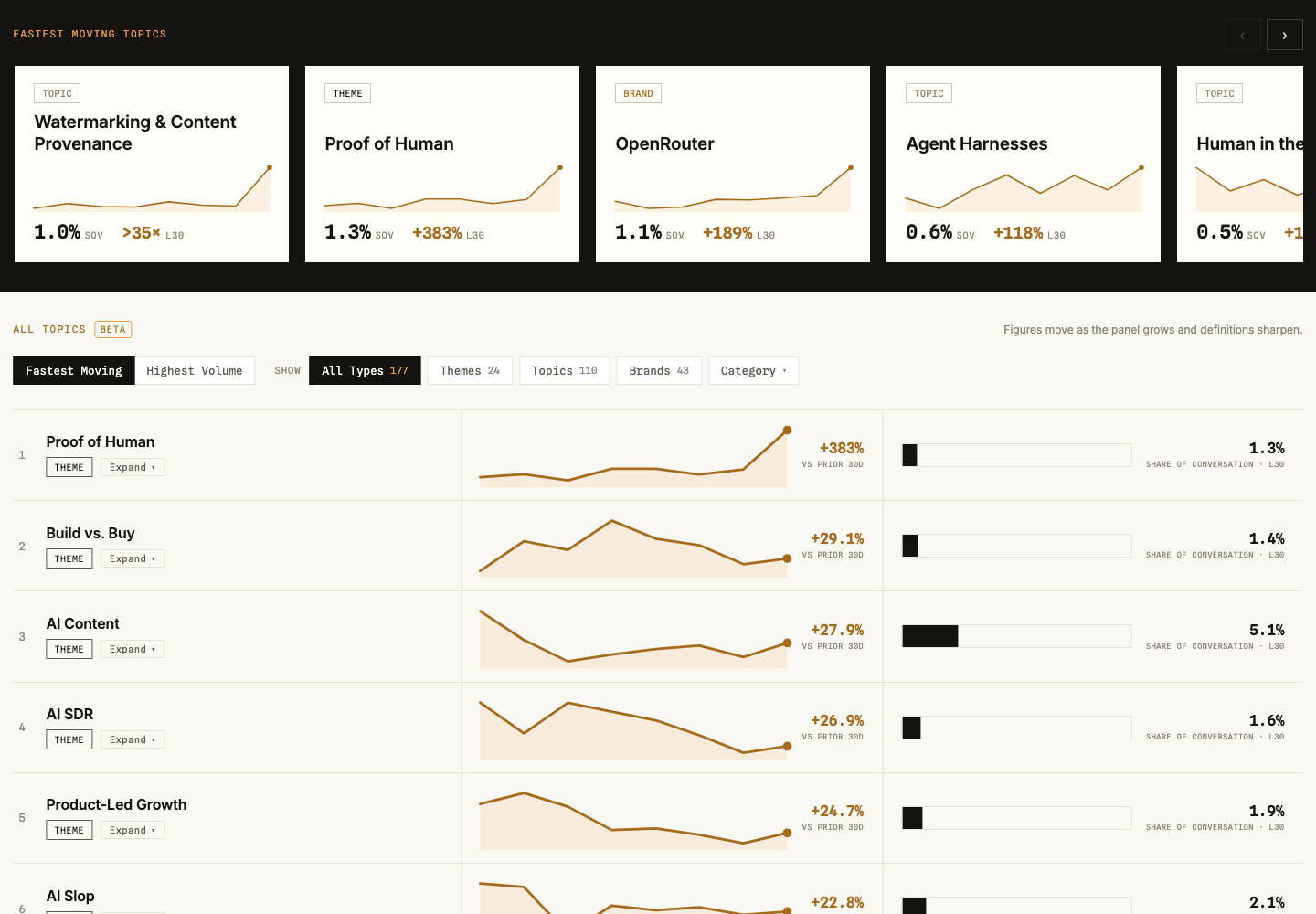
Loading people…
join 19,649+ gtm leaders, unsub anytime.
Hi, I'm Adam. I'm an independent builder & industry analyst. My goal is to help GTM leaders make sharp decisions in uncertain markets.
This is the methodology for my GTM Market Tracker — the score, the rankings, and the category maps.
Topics measure what the GTM conversation is actually about, at two grains.
Clusters are built from topics, so both appear in one ranked list.
The volume and change measures are both variations on Share of Voice (SOV). The volume is a count of posts fitting the topic or theme, engagement weighted. The denominator is every panel post that matched at least one maintained topic.
Shares do not add up to 100%. A post about coding agents inside GTM engineering is about both, so it counts for both — the number is prevalence, not a slice of a pie.
Beta. These figures move as the panel grows and the definitions sharpen. Every published number carries the registry version it was measured under, and when a change reprices the board I say so in that issue's notes.
I cover products and companies with a central application for B2B go-to-market in the AI era. Most are sales- or marketing-focused (e.g. Gong, Clay), but I also cover broader solutions that are clearly GTM-relevant (e.g. Claude Code, Vercel, Exa).
On the edges my judgment determines what fits (and what doesn't). Like all things, this evolves as I learn and as the market changes.
Brand's share of panel conversation, normalized 0–99 against the field.
My scores are a share-of-voice (SOV) measure, not a rating of the product capabilities. I am not scoring whether a product is good or best. I'm measuring how much it shows up in the GTM conversation. This a useful concept to understand market trends, but isn't a buyer score alone.
Here's how it works:
| Window | What it answers | |
|---|---|---|
| SOV Score | Last 90 days | Where does this brand stand right now? |
| 60-day move | Last 60 days vs the 60 before them | Which direction is it heading? |
The move is a percentage change in share of panel conversation — the brand's share over the last 60 days against its share over the 60 days before that. Both are recalculated nightly, against the panel as it stands that night. The move window ends two days back, because the most recent day or two of collection is still filling in. Scores you see today are as of 2026-11-02.
A voice is a source on the curated panel. It's a person or a publication whose GTM commentary I've chosen to track, across LinkedIn, X, newsletters, blogs and podcasts. It is a carefully curated list or experts and operators, not a crawl of the internet. I have three rules for reading the panel.
Brands sit inside Markets. These are my framework for grouping companies by the AI era "races" and don't necessarily align to traditional industry categories. Two different things can be true of a brand at once:
My highest level organizing framework has a strong bend toward AI. I believe the traditional categorization is breaking down quickly. This is how I see the space at a high level:
| Type | Definition | Examples |
|---|---|---|
| Coding Agents & Experience Builders | AI coding assistants and app builders. | Claude Code, Cursor, Lovable |
| Orchestration | The workflow layer that wires data, agents, and apps into GTM systems. | Clay, Zapier, n8n |
| Agent-Native GTM | Software where agents are core and do the work — purpose-built for GTM jobs. | 11x, Artisan, Attio |
| GTM Developer Tools | The API- and MCP-first primitives used to build and run agent-based GTM systems. | Exa, Vercel, ElevenLabs |
| SaaS for GTM | The GTM application layer — multi-feature software you operate for sales, marketing and CS. Many are going headless and shipping agents. | Salesforce, HubSpot, Gong |
| Creative & Content | AI generation of media assets — images, video, decks, avatars, copy. | Canva, Runway, HeyGen |
| AEO | Platforms that help brands measure & optimize visibility inside AI answers. | Profound, Scrunch AI, AthenaHQ |
| GTM Adjacent | Broad, general-purpose platforms a company runs on (comms, docs, cloud, data) — used by GTM but orthogonal to sales and marketing execution. | Slack, Notion, Snowflake |
Categories are generally organized around use cases, go-to-market motions, or the intersection of the two. That said, there is a balance of many factors in this framework and it ultimately comes down to my judgment.
| Category | Definition | Examples |
|---|---|---|
| GTM Developer Tools | Broad dev primitives GTM teams run through agents and APIs. | Exa, Vercel, Twilio |
| Data & Intelligence | Enrichment, intent, and signal data that feeds the pipeline. | Clay, ZoomInfo, Apollo |
| Selling | Active deal execution — conversation intelligence, coaching, proposals, demos. | Gong, Salesforce, Granola |
| Marketing Execution | Campaigns, content, ABM, and marketing ops. | HubSpot, Klaviyo, Customer.io |
| Advertising | Paid-media execution and measurement — DSPs, paid social and search, attribution. | The Trade Desk, LiveRamp, Metadata |
| Creative & Content | AI generation of GTM media — video, images, decks, avatars, copy. | Canva, Runway, HeyGen |
| GTM Infrastructure | GTM-specific pipes — email deliverability, CDP and reverse-ETL, billing. | Hightouch, Metronome, Paddle |
| Website & Inbound | Websites, chat, and inbound capture that convert traffic into pipeline. | Webflow, Chili Piper, Framer |
| AEO | Visibility inside AI-generated answers. | Profound, Scrunch AI, AthenaHQ |
| Prospecting | Outbound — finding, qualifying, and reaching buyers. | Outreach, Salesloft, Nooks |
| Customer Success | Post-sale onboarding, retention, and expansion. | Intercom (Fin), Gainsight, Zendesk |
| Autonomous CRM | AI-native CRMs that run pipeline, deals, and relationships themselves. | Attio, Day.ai, Clarify |
Products can fit types and multiple categories, but there must be a strong case.
I score Agent Readiness as a secondary factor, but it matters: in an agent era, whether your systems can actually build on a product matters more than its UI. It's an analyst-judged 0–99 score (with an A–F grade) across four surfaces — API, MCP server, SDK, and CLI — plus the quality of the docs behind them. Multiple agents, each with a different persona, assess those surfaces and docs; the Surfaces column shows exactly which a product ships.
The index covers people whose professional work is relevant to GTM, including sales, marketing, growth and the AI tools shaping that work. Ranking requires at least 5 eligible authored LinkedIn posts in a trailing 90 day window. We count authored posts from vendor voices; for other creators, posts must relate to GTM. We publish the top 200 GTM Practitioners & Creators and top 150 GTM Tech Vendor Voices by score. The "Scored" count shows the published creators in each category; "Tracked" includes the broader coverage roster.
Scores compare each creator with the full field, on a scale up to 99. The same weights apply across both categories.
| Component | Weight |
|---|---|
| Average engagement per post | 30% |
| Total engagement | 30% |
| Known audience | 40% |
Engagement combines reactions, comments and reposts. Known audience combines LinkedIn followers and verified newsletter subscriber counts.
GTM Practitioners & Creators do or teach GTM work, including GTM practitioners at horizontal AI companies. GTM Tech Vendor Voices are founders, leaders and employees of core GTM technology vendors in the Tech Index.
Send any suggestions or issues to adam at adamgtm.com. I verify them, write the fix back to the system and publish.
If you're building something interesting in this space, but it's not covered yet, please suggest a product here.
Building or running a product that belongs in the GTM Index? Tell us about it. We review every submission and add the ones that fit.
join 19,649+ gtm leaders, unsub anytime.